

Expert Seed Storage Solutions for Every Gardener
Table of Contents
- Why Professional Seed Storage Solutions Matter for Germination Rates
- Temperature and Humidity Control for Seed Viability
- Seed Moisture Content Management: The Critical Variable Most Gardeners Ignore
- Best Seed Storage Containers for Gardeners at Every Scale
- Long Term Seed Storage Tips That Actually Preserve Genetic Quality
- Phytosanitary Treatment and Pathogen Prevention Before Storage
- Seed Storage Solutions: Certification Standards and Operational Costs
- Frequently Asked Questions
Last Updated: September 1, 2026
Why Professional Seed Storage Solutions Matter for Germination Rates
Most gardeners invest months selecting rare heirloom varieties, then store them in kitchen drawers in paper envelopes. By spring, germination rates drop sharply and some seeds won't sprout at all.
Seeds are living organisms in dormancy. Their viability depends on maintaining stable internal moisture and temperature from harvest through planting. Disrupt those conditions and the seed's metabolic processes either activate prematurely or degrade irreversibly, neither outcome is recoverable.
According to USDA Agricultural Research Service guidance on seed biology, the two variables that most directly govern seed longevity are temperature and relative humidity. Everything else is secondary.
Temperature and Humidity Control for Seed Viability
Temperature and humidity control is the single most important factor in long-term seed storage. Get these two variables right and most other mistakes become manageable.
Optimal Conditions for Long-Term Biological Stability
Seed viability is the capacity of a seed to germinate under favorable conditions. It degrades predictably when exposed to heat, fluctuating temperatures, or elevated moisture. A well-established rule in seed banking is that every 1% increase in seed moisture content roughly halves storage life, and every 10°F rise in storage temperature produces a similar effect.
For home gardeners, the practical targets are:
- Temperature: 32°F to 41°F for long-term storage; a dedicated refrigerator section works well
- Relative humidity: below 50%, ideally between 20% and 40%
- Consistency: temperature swings are more damaging than a slightly elevated constant temperature
Freezing is appropriate for seeds intended for multi-year storage, but only if seeds are first dried to below 8% moisture content. Freezing moist seeds causes ice crystal formation inside the seed tissue, destroying the embryo.
Using Desiccants and Airtight Technology to Prevent Moisture Damage
Airtight storage technology prevents ambient moisture from reaching seeds, which is especially critical in humid climates or during seasonal humidity swings.
Silica gel desiccant packets are the standard tool for moisture management inside sealed containers. They absorb excess moisture passively and can be recharged by drying them in an oven at low heat. Color-indicating silica gel changes from blue to pink when saturated, signaling replacement or recharging.
The combination of airtight sealing and active desiccation is what seed banks use at the institutional level. The same principle scales down to a well-designed home storage kit.
Seed Moisture Content Management: The Critical Variable Most Gardeners Ignore
Most guides focus on containers and temperature but skip seed moisture content management, often the reason seeds fail even when storage conditions look correct.
Seeds absorb moisture from the air around them. If you harvest seeds on a humid morning and seal them immediately, you're trapping high-moisture seeds in an enclosed environment. Even with desiccants present, seeds with high internal moisture content deteriorate faster than properly dried seeds.
The correct sequence is: dry first, then seal.
Spread freshly harvested seeds on a paper towel or mesh screen in a low-humidity environment for 1 to 2 weeks before placing them in storage containers. Avoid drying near heat sources, which can damage the embryo. Seeds are adequately dry when they snap rather than bend under pressure. According to Cornell University Cooperative Extension resources on seed saving, consistent drying before storage is the most commonly overlooked step in home seed-saving practice.
Best Seed Storage Containers for Gardeners at Every Scale
The right container depends on collection size, storage duration, and available space. What separates a functional seed storage system from a chaotic one is how well it controls the environment inside and how easily it supports organization.
What Separates a Quality Container from a Basic Envelope or Bag
Paper envelopes are acceptable for short-term storage of a season or two, but their fatal flaw is moisture permeability. Paper breathes, meaning humidity changes directly affect seeds inside. In humid climates or uncontrolled storage spaces, paper envelopes accelerate moisture absorption.
Rigid containers with sealed lids, glass jars with rubber gaskets, or purpose-built seed storage vials offer genuine hermetic sealing. The best containers combine airtight closure, individual compartments to separate varieties, labeling surfaces, and compact design that fits in a refrigerator.
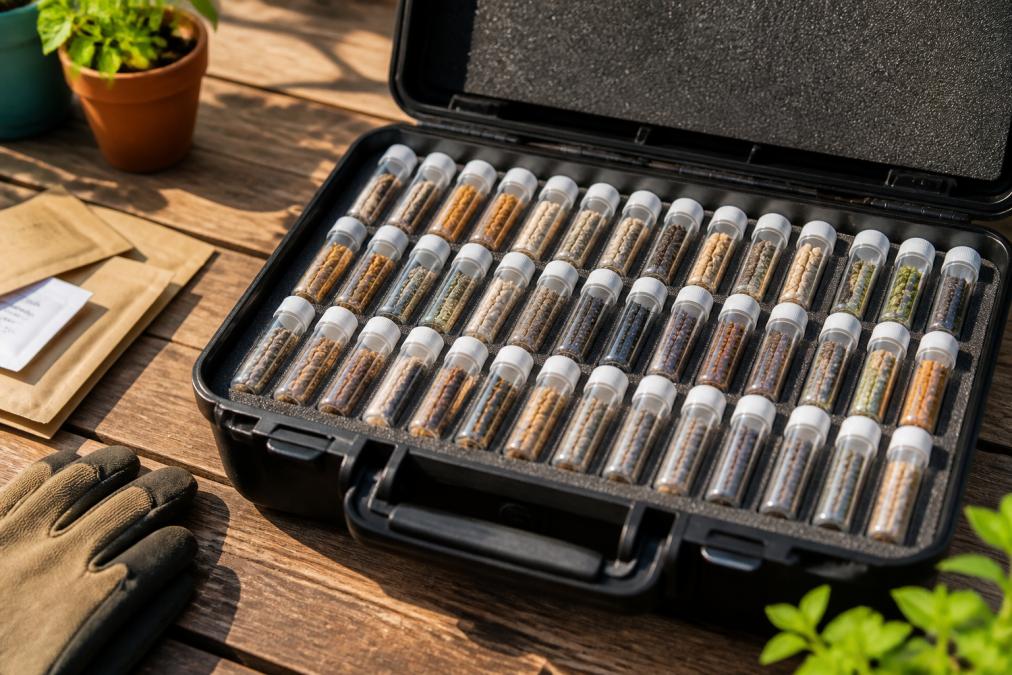
The WALERICA Seed Storage Organizer: 120 Varieties, One System
The WALERICA Seed Organizer Kit from Moderno Top Shop at $49.99 is a purpose-built system for gardeners managing collections from a handful of varieties up to 120 distinct types. It addresses the most common failure points in home seed storage: disorganization, inadequate labeling, and insufficient moisture protection.

The kit includes 120 individual storage vials, labels, envelopes, and essential tools. The water-resistant design resists ambient humidity, and individual vials allow each variety to be sealed separately, preventing cross-contamination and moisture transfer between varieties. Setup takes minutes with no assembly tools required.
| Container Type | Moisture Protection | Organization | Best For |
|---|---|---|---|
| Paper envelopes | Low | Minimal | Short-term, 1 season |
| Plastic zip bags | Moderate | Low | Occasional use |
| Glass jars with gaskets | High | Limited | Small collections |
| WALERICA vial system | High | 120 varieties | Serious collectors |
Long Term Seed Storage Tips That Actually Preserve Genetic Quality
Long-term seed storage means maintaining genetic quality, not just keeping seeds alive. A seed that germinates but produces a weak, off-type plant has failed the purpose of preservation. Genetic stability requires consistent conditions, disciplined rotation, and a system that tracks what you have.
Labeling, Inventory Monitoring, and Rotation Protocols
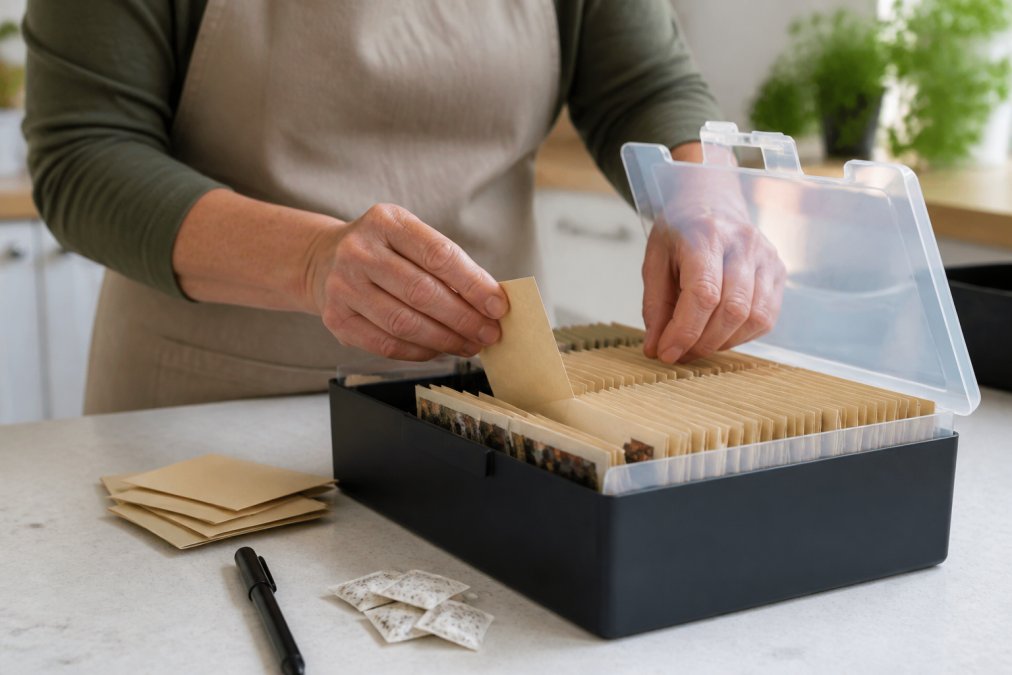
Label everything at the moment of storage, not later. Once seeds are in containers, they look nearly identical. Effective labels include variety name and species, source, harvest or purchase date, and expected viability window.
A basic inventory log, even a handwritten notebook or simple spreadsheet, allows you to track germination test results and identify which varieties are approaching the end of their viable storage window. Rotate older seeds to the front and use them first.
Emergency Protocols When Storage Conditions Fail
Refrigerator failure: Remove seeds immediately and transfer to the coolest, driest room available. Do not re-freeze seeds that have partially warmed unless you can verify they are still below 8% moisture content.
Flooding or water exposure: Remove seeds from any submerged container immediately. Spread on paper towels in a dry environment. Seeds wet for more than a few hours may have begun germinating or may be infected with pathogens.
Extended power outage: A sealed, insulated cooler with ice packs can maintain safe temperatures for 24 to 48 hours.
Phytosanitary Treatment and Pathogen Prevention Before Storage
Phytosanitary treatment eliminates or reduces seed-borne pathogens before long-term storage. Seeds can carry fungal spores, bacterial infections, and viral particles from the parent plant. Sealing infected seeds in an airtight container does not stop pathogen activity, it can concentrate it.
Basic phytosanitary protocols for home gardeners:
- Visual inspection: Discard any seeds with visible mold, discoloration, shriveling, or unusual texture.
- Hot water treatment: Many vegetable seed pathogens are eliminated by soaking seeds in water held at 122°F for 25 minutes, validated by University of California Agriculture and Natural Resources seed treatment guidelines for tomatoes, peppers, and brassicas.
- Dry heat treatment: Exposing seeds to 95°F for several days in a low-humidity environment reduces surface pathogen loads.
- Separation: Store seeds from diseased plants in a separate, clearly marked area.
The goal is reducing pathogen load to a level that does not threaten the stored collection or future crops.
Seed Storage Solutions: Certification Standards and Operational Costs
Professional seed storage solutions operate under certification frameworks that define quality standards for seed viability, purity, and labeling. In the United States, seed certification is administered through the Association of Official Seed Certifying Agencies (AOSCA). The AOSCA certification standards and member state agencies provide a baseline framework that commercial seed producers must meet. While home gardeners are not required to certify their seeds, the standards offer a useful benchmark for evaluating seed quality and storage effectiveness.
The real cost comparison is between a dedicated organizer and the cost of replacing seeds that fail due to poor storage. Rare heirloom varieties and specialty vegetables can be difficult to source and expensive to replace. A system that costs $49.99 and preserves 120 varieties reliably for multiple seasons is a straightforward value proposition against buying replacement seeds each year.
| Storage Approach | Upfront Cost | Annual Maintenance | Viable Storage Duration |
|---|---|---|---|
| Paper envelopes, room temp | Minimal | Low | 1-2 seasons |
| Glass jars, refrigerated | Low | Low | 3-5 years |
| Purpose-built vial system | Moderate | Low | 3-5+ years |
| Commercial cold storage | High | High | 10+ years |
Maintaining seed viability over multiple seasons requires a system that controls moisture, maintains consistent temperature, supports clear labeling, and gives you a plan when conditions fail. The WALERICA Seed Organizer Kit from Moderno Top Shop brings together water-resistant construction, 120 individual vials, and an integrated labeling system into a single setup that takes minutes to configure. Get your WALERICA Kit and protect every variety in your collection before the next planting season.
Frequently Asked Questions
What are the optimal temperature and humidity levels for long-term seed storage?
Most seeds store best at temperatures between 32°F and 41°F with relative humidity below 40%. A practical rule: the sum of the storage temperature in Fahrenheit and the relative humidity percentage should stay below 100 for reliable viability. A refrigerator or cool basement works well for home gardeners. Airtight containers with desiccant packets help maintain those low-humidity conditions, which is the single biggest factor in slowing seed aging.
How does the WALERICA Seed Storage Organizer improve seed longevity?
The WALERICA Seed Storage Organizer holds up to 120 individual seed varieties in separate vials inside a water-resistant case. Keeping each variety isolated prevents cross-contamination and moisture transfer between batches. The included labels make rotation easy, so older seeds get used first. At $49.99, the system eliminates the loose envelopes and mixed bags that expose seeds to humidity fluctuations, which is the most common cause of poor germination in home collections.
How can you prevent moisture damage in professional seed collections?
Seed moisture content management is the core of any prevention strategy. Dry seeds thoroughly before sealing them, target a seed moisture content of 5-8% for most vegetable and flower varieties, and include food-grade silica gel desiccant packets in every sealed container. Check desiccants every three to six months and replace or recharge them when they change color. Airtight containers, whether vials, glass jars, or purpose-built organizers, stop ambient humidity from reaching the seeds.
I only have around 30 seed varieties. Is a 120-slot organizer too large for my collection?
Not at all. Starting with unused slots is an advantage. As your collection grows through seed swaps, saving from harvests, or trying new varieties each season, the extra capacity means you won't need a second system. The WALERICA kit's vials also work well for storing smaller quantities of a single variety across multiple slots, letting you separate seeds by harvest year, which is a standard practice for tracking viability over time.
This article was written using GrandRanker
