

Seed Protection in Greenhouses: A Complete Guide
Table of Contents
- Why Seed Protection in Greenhouses Matters
- Integrated Pest Management for Seeds
- Long Term Seed Storage Tips to Prevent Pest Damage
- Seed Storage Containers for Greenhouses
- Prevention and Monitoring Techniques
- Environmental Conditions for Seed Viability
- Identifying and Responding to Pest Damage
- Frequently Asked Questions
Last Updated: September 19, 2026
Why Seed Protection in Greenhouses Matters
Protecting seeds against pests in a seed protection greenhouse is critical, once pest damage occurs, recovery becomes exponentially harder. The difference between a thriving crop and a failed season often comes down to preventive measures taken long before seedlings emerge.
Greenhouse conditions, warm temperatures, consistent humidity, and dense plant populations, accelerate pest reproduction cycles. A single undetected outbreak can compromise hundreds of seedlings within days, which is why integrated pest management (IPM), combining multiple control strategies, has become the standard in professional seed protection.
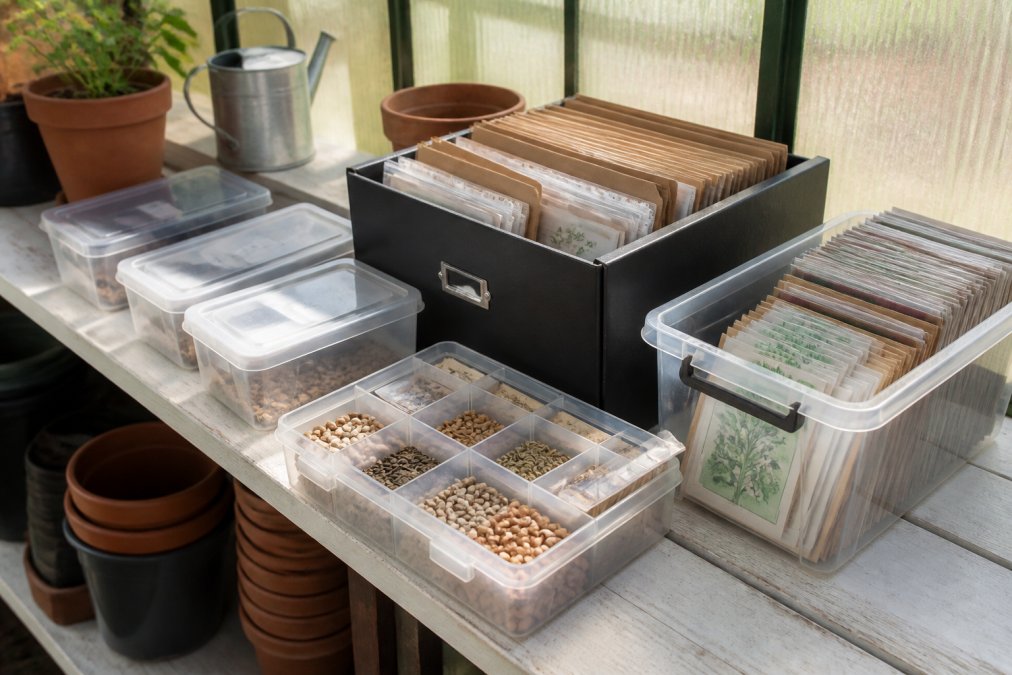
Seed protection greenhouse management starts with organization and proper storage. The WALERICA Seed Storage Organizer addresses this foundational need by keeping seeds protected, labeled, and ready for each planting season.
Integrated Pest Management for Seeds
Integrated pest management (IPM) combines cultural, biological, and chemical tactics to minimize pest damage while reducing environmental impact and operator exposure. For seed protection, IPM means implementing multiple safeguards simultaneously with explicit attention to worker safety and treatment compatibility.
Effective IPM starts with prevention: sanitation practices (clean surfaces, sterilized tools, disinfected soil) eliminate pest habitats, while monitoring systems (visual inspections and sticky traps) catch early infestations before they spread.
Biological control introduces natural predators and parasites, ladybugs, parasitic wasps, and predatory mites, to control aphids, whiteflies, and spider mites without chemical residues. However, success depends on treatment compatibility: many chemical treatments kill beneficial insects. Before applying chemicals, verify compatibility with planned biological control releases. Neem oil is toxic to parasitic wasps for 3-5 days post-application; insecticidal soaps require 24-48 hours drying time before insect release.
Cultural practices, crop rotation, proper spacing (4-6 inches between containers), and humidity management (50-60%), reduce pest pressure. Increased air circulation using horizontal airflow fans prevents stagnant microclimates where fungus gnats and Botrytis thrive.
Chemical treatments are applied strategically only when pest populations exceed action thresholds. Operator safety is non-negotiable: wear nitrile gloves, safety glasses, and NIOSH-approved respirators rated for the specific active ingredient. Apply during low-traffic periods with adequate ventilation (minimum 6 air changes per hour) and maintain a 24-48 hour re-entry interval. Keep Safety Data Sheets (SDS) on-site for every product. Never mix chemical treatments unless the label explicitly permits it.
Long Term Seed Storage Tips to Prevent Pest Damage
Long-term seed storage requires attention to multiple factors that impact both seed viability and pest resistance. Improperly stored seeds become weakened and more susceptible to pest damage and disease.
Temperature stability is critical: maintain 32-50°F (0-10°C) to extend seed longevity. Humidity control is equally important, maintain 5-15% moisture to prevent mold growth and pest attraction.
Airtight, food-grade plastic or glass containers with tight-sealing lids prevent pest entry and maintain stable humidity. Avoid paper envelopes or cloth bags; vacuum-sealed packets with oxygen absorbers provide maximum protection by removing the air pests need to survive.
Labeling is essential for rotation and tracking. Proper labeling systems ensure you use older seeds first and maintain consistent quality.
Centralized storage allows regular inspection and immediate response to pest activity, preventing infestations from spreading across scattered seed locations.
Seed Storage Containers for Greenhouses
Selecting appropriate containers is essential for seed protection in greenhouse settings. Different storage needs require different container types.
Airtight plastic containers with secure locking mechanisms and glass jars with rubber gasket seals prevent insect penetration and maintain stable internal humidity while allowing seed condition monitoring.
For long-term storage, vacuum-sealed bags with oxygen absorbers represent the gold standard, creating an environment where pest eggs cannot develop and fungal spores cannot germinate.
The WALERICA Seed Storage Organizer combines multiple container types in one integrated solution, organizing seeds into individual compartments with labeled envelopes and a water-resistant structure that maintains physical barriers necessary for pest prevention.
Individual compartments prevent cross-contamination between seed varieties and contain infestations, preventing spread to other compartments, particularly valuable when managing multiple crop varieties.
Keep containers in cool, dry areas away from direct sunlight. Basements, climate-controlled storage rooms, or insulated greenhouses provide stable temperature and humidity.
Prevention and Monitoring Techniques
Effective prevention requires consistent, systematic monitoring combined with environmental controls. The goal is detecting problems early when intervention options remain simple and non-invasive.
Visual Inspection Protocol
Walk through greenhouse areas twice weekly during active production, weekly during storage-only periods. Examine seedlings and containers for yellowing leaves, wilting, visible insects, webbing, droppings, or actual pests. Document findings noting date, location, pest type, and affected plant count. Early detection, catching infestations affecting fewer than 5% of seedlings, prevents exponential population growth; most pests double every 7-14 days under optimal conditions.
Sticky Trap Monitoring
Yellow and blue sticky cards provide passive monitoring of flying insects. Yellow traps attract whiteflies, fungus gnats, and some aphids; blue traps attract thrips. Place traps at seedling canopy height (approximately 12-18 inches above soil) near seed storage areas and seedling benches, using one trap per 200 square feet of greenhouse space. Check traps twice weekly, counting insects and replacing cards when they become covered (typically every 2-3 weeks). Trapped insect counts establish baseline populations and reveal trends: increasing trap counts over consecutive weeks indicate growing pest pressure requiring intervention, while stable or declining counts suggest current controls are working. A threshold of 5-10 whiteflies per trap per week signals the need to escalate monitoring frequency or introduce biological controls; 15+ insects per trap per week indicates chemical intervention may be necessary.
Environmental Monitoring
Environmental controls reduce pest pressure without chemicals. Maintain humidity between 50-60% using hygrometers placed at multiple greenhouse locations; humidity above 70% favors fungal diseases and some insects, while below 40% stresses seedlings and slows pest reproduction but risks seed desiccation. Proper air circulation using horizontal airflow fans (running 2-4 hours daily) prevents the stagnant conditions where fungal diseases and some insects thrive. Monitor temperatures with min/max thermometers; temperatures below 75°F (24°C) slow pest reproduction cycles, giving you more time to respond to infestations before they become critical. Record temperature and humidity daily; sudden spikes often precede pest outbreaks.
Sanitation Protocols
Eliminate pest habitats through scheduled sanitation. Remove dead plant material, fallen leaves, and debris weekly, these are primary pest harborage sites. Clean greenhouse benches, tools, and containers with a 10% bleach solution (1 part household bleach to 9 parts water) or commercial greenhouse disinfectants containing quaternary ammonium compounds; allow 10 minutes contact time before rinsing. Sterilize potting soil before use by heating to 180°F (82°C) for 30 minutes, or purchase pre-sterilized media. These practices remove the conditions where pests establish populations.
Isolation and Quarantine
Isolation of new plants prevents pest introduction. Quarantine new seed shipments or transplants for 1-2 weeks in a separate area before introducing them to main growing spaces. During quarantine, inspect plants daily for pest signs and treat any infestations before moving material to production areas. This simple step catches infestations before they spread to your entire operation, potentially saving hundreds of seedlings.
Decision Framework for Escalation
Use this framework to determine when monitoring alone is insufficient: If visual inspection finds pests on fewer than 5 plants or sticky traps show fewer than 5 insects per trap per week, continue monitoring and increase sanitation frequency. If pests appear on 5-15% of seedlings or trap counts reach 5-15 insects per trap per week, introduce environmental controls (increase air circulation, adjust humidity) and consider biological control release. If infestation exceeds 15% of plants or trap counts exceed 15 insects per trap per week, implement chemical treatment following label directions and operator safety protocols outlined in the IPM section above.
Environmental Conditions for Seed Viability
The environment where seeds are stored and germinated directly determines whether pests find conditions favorable for reproduction. Controlling these conditions serves dual purposes: maintaining seed viability while creating hostile conditions for pests.
Temperature fluctuations accelerate seed aging and weaken germination vigor. Seeds stored at consistent cool temperatures maintain viability significantly longer than those experiencing temperature swings. Each 10°F (5.5°C) increase above optimal storage temperature roughly halves seed longevity. This means seeds stored at room temperature (70°F/21°C) age four times faster than those stored at 40°F (4°C).
Humidity control prevents both seed deterioration and pest attraction. Excessively dry seeds lose viability quickly. Excessive moisture invites fungal growth and pest colonization. The sweet spot, 5-15% moisture content, maintains seed integrity while creating an inhospitable environment for most pests. Moisture-absorbing packets or silica gel inside storage containers maintain this optimal range.
Light exposure degrades seed quality over time. Seeds stored in opaque containers maintain viability better than those exposed to light. This is why dark storage areas outperform locations near windows or under grow lights.
Oxygen levels affect both seed respiration and pest survival. Seeds require minimal oxygen during storage. Reducing oxygen through vacuum-sealing or oxygen absorbers preserves seeds while preventing pest development. Many insect species cannot complete their life cycles in low-oxygen environments, making this a particularly effective control method.
Proper environmental conditions create a greenhouse management challenge: seedlings need warm, humid, well-lit conditions to germinate and grow, but seeds in storage need cool, dry, dark conditions for preservation. This is why separate seed storage areas, distinct from active growing spaces, become essential.
Identifying and Responding to Pest Damage
Recognizing pest damage early determines whether your response prevents crop loss or merely slows inevitable decline. Different pests leave distinctive signs that guide your response strategy.
Frequently Asked Questions
What are the most effective ways to store seeds to prevent pest infestation?
Store seeds in airtight, moisture-proof containers in cool, dry conditions between 32-41°F and 20-30% relative humidity. Use sealed storage containers designed for greenhouses, maintain proper labeling for inventory control, and keep seeds isolated from soil and plant material where pests breed. Regular monitoring and rotation of older seeds ensures viability while reducing pest exposure over time.
How does integrated pest management apply to seed storage?
Integrated pest management for seeds combines prevention, monitoring, and targeted intervention. Start by excluding pests through sanitation and sealed storage, monitor regularly for signs of infestation, use biological controls when appropriate, and apply chemical treatments only when necessary. This approach minimizes damage while reducing reliance on pesticides and protecting seed quality.
What environmental conditions are best for long-term seed storage?
Long term seed storage tips emphasize cool temperatures (32-41°F), low humidity (20-30%), and darkness to maintain germination rates. Fluctuating temperatures and high moisture accelerate seed aging and create conditions favorable for pest and pathogen development. Consistent conditions in dedicated storage areas extend seed viability for years and reduce pest pressure naturally.
How can I identify pest damage in stored seeds?
Look for small holes in seed coats, discoloration, mold growth, or presence of live insects or larvae. Damaged seeds often show reduced germination rates or fail to sprout. Early detection through visual inspection and monitoring traps allows you to isolate affected batches and prevent spread to healthy seeds before major losses occur.
