
Benefits of Labeling Crop Seeds: A 2026 Guide
Table of Contents
- Why Labeling Crop Seeds Matters
- Best Seed Storage Containers 2026 and Labeling Systems
- How to Organize Garden Seeds with Proper Identification
- Seed Packet Information Requirements for Accurate Tracking
- Tracking Seed Germination Rates Through Labeling Data
- Protecting Your Seed Collection Long-Term
- Frequently Asked Questions
Last Updated: September 21, 2026
Why Labeling Crop Seeds Matters
Proper seed identification transforms gardening from guesswork into a reliable system. When you label crop seeds, you eliminate confusion during planting season and create a permanent record of what grows best in your space. This simple practice prevents costly mistakes like planting the wrong variety, mixing up germination timelines, or losing track of which seeds perform well year after year.
Many gardeners learn this the hard way: planting unmarked seeds leads to wrong varieties, forgotten planting depths, and wasted resources. Labeling crop seeds prevents these mistakes by creating a clear, accessible system for any garden size.
Proper labeling also protects your investment by keeping varieties distinct and traceable, preventing cross-contamination and genetic loss.
Best Seed Storage Containers 2026 and Labeling Systems
The right storage system makes labeling practical and effective. Understanding cost-benefit trade-offs helps you choose a system that matches your scale and pays for itself.
Commercial Seed Storage Systems
Purpose-built seed storage kits integrate organization and labeling into a single product. The WALERICA Seed Storage Organizer Kit holds up to 120 individual seed storage vials in a portable box, with each vial having a dedicated label area. The kit includes waterproof labels, clips, and tweezers designed for seed handling. The water-resistant construction protects seeds from moisture damage, which is critical for long-term viability. The sturdy handle makes it portable, so you can move your entire collection between storage locations or take it to your garden when planting.

This system is effective for labeling crop seeds because it integrates storage and identification from the start: vials are sized for easy handling, labels are positioned for readability, and the layout prevents seeds from shifting.
Other commercial options include built-in card systems and modular drawer systems. The upfront investment is higher than DIY approaches, but time savings and protection can justify the cost for serious gardeners.
DIY and Low-Cost Alternatives
Repurposing household containers costs less upfront but creates problems: paper envelopes absorb moisture, plastic bags don't protect from light or temperature, and fading labels cause confusion. Gardeners using unmarked or poorly labeled storage can lose track of their collection within two seasons.
For DIY storage, use archival-quality envelopes and waterproof labels in a rigid container, organized consistently with a written or digital inventory. This works for small collections (under 50 varieties) but becomes unwieldy as your collection grows.
Economic Impact of Proper Labeling
A storage system can protect a collection of varieties and extend seed viability.
A well-organized system lets you locate seeds quickly, saving time compared to searching through disorganized collections.
Tracking which varieties perform well in your conditions can optimize seed purchases and improve harvest quality.
Digital Labeling and Inventory Management
For operations managing more than 100 varieties, spreadsheet-based inventory (Google Sheets, Excel) costs nothing and lets you track acquisition date, germination percentage, storage location, and performance notes in searchable columns.
QR codes printed on physical labels can link to detailed digital records, balancing permanence with flexibility. For small-scale operations, generating a free QR code and linking it to a shared document takes minutes and costs nothing.
Dedicated inventory software tracks lot numbers, germination data, and usage history but is overkill for most home gardeners.
Choosing the Right System for Your Scale
Home gardeners (20-50 varieties): DIY or small commercial kit. Serious gardeners (50-200 varieties): Commercial system plus spreadsheet. Commercial operations (200+ varieties): Modular system with barcode/QR codes and software.
How to Organize Garden Seeds with Proper Identification
Effective seed organization follows a simple sequence: container selection, immediate labeling, systematic arrangement, and regular inventory updates. Start with a storage system like WALERICA that provides structure and labeling tools.
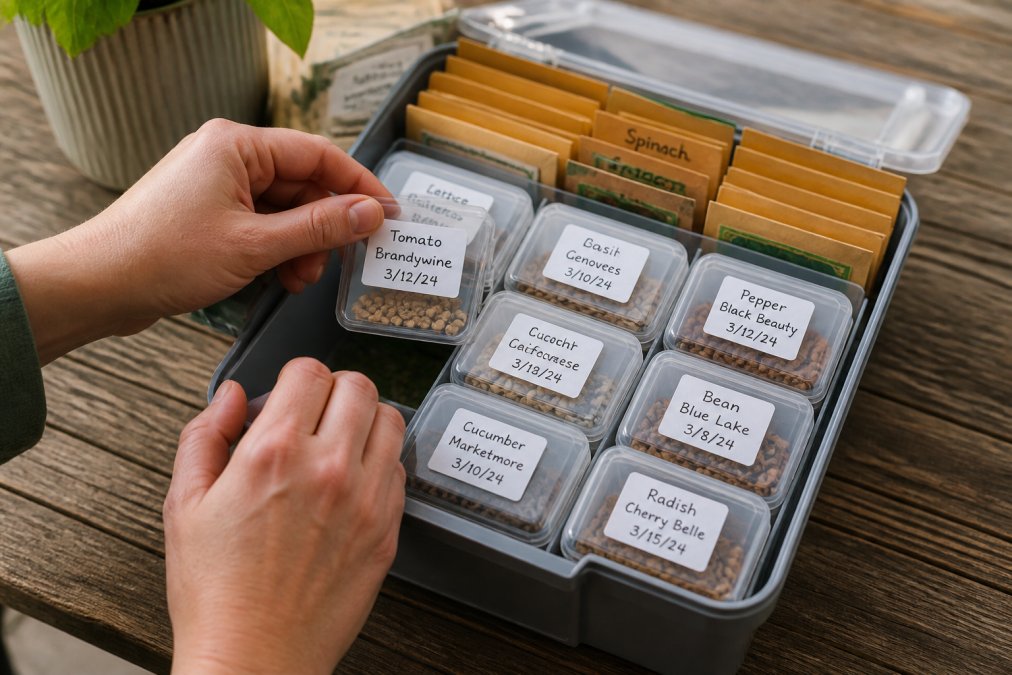
Label each container before storing seeds: write the variety name, acquisition or harvest date, and notes on growing conditions. Use waterproof labels or permanent markers to ensure information survives storage.
WALERICA Seed Storage Organizer Kit →
Arrange seeds in a logical order, by planting season, plant type, or garden bed. Consistency matters more than the specific system; stick with your choice so you can locate seeds quickly.
Update your inventory regularly, noting which seeds germinated well and which underperformed. A well-organized collection with clear labeling crop seeds information becomes a living reference guide for your growing practice.
Seed Packet Information Requirements for Accurate Tracking
Seed labeling in the United States is governed by the Federal Seed Act and state seed laws, which mandate specific information on every commercial seed container.
Legally Required Information
The Federal Seed Act requires seed labels to include the product name, labeler name and address, lot number, percentages of pure seed, other ingredients, inert matter, and weed seeds, germination percentage with test date, and (for vegetables) the percentage capable of reaching flowering stage. These are legal requirements for any seed sold across state lines.
The lot number creates traceability: if a seed lot performs poorly or is recalled, the lot number identifies exactly which seeds are affected.
Beyond Legal Minimums: Practical Information
Beyond legal minimums, include the acquisition or harvest date to track seed age. Most vegetable seeds remain viable for a period, but this varies by type. Dating labels lets you prioritize older stock and avoid expired seeds.
Include planting depth and spacing requirements on your label or in a companion reference sheet, ensuring you have this information at planting time without hunting through old packets.
Note the optimal germination temperature range. This can prevent attributing germination failure to bad seeds when the real cause is incorrect soil temperature.
Note storage condition requirements (cold stratification, drying, humidity control) to prevent accidental mishandling of heirloom or saved seeds.
Digital Enhancement: QR Codes and Extended Records
QR codes on physical labels can link to digital records containing germination history, disease resistance traits, days to maturity, and performance notes, combining permanence with searchability.
For small-scale producers or home gardeners, a QR code linking to a shared document (such as a Google Sheet) costs nothing to generate and print. For commercial operations, QR codes integrated with inventory management software create real-time traceability that satisfies both regulatory audits and customer transparency demands. The physical label remains the primary identifier, but the QR code extends its functionality without cluttering the label itself.
Organizing Information for Different Contexts
Your labeling system should accommodate both immediate planting needs and long-term record-keeping. A simple label on the storage container might show only the variety name, acquisition date, and germination percentage. A companion planting journal or digital record can hold the deeper details: planting depth, spacing, days to maturity, disease resistance codes, and performance notes. This two-tier approach keeps the physical label uncluttered while ensuring no critical information is lost.
Tracking Seed Germination Rates Through Labeling Data
Labels create a feedback loop that improves your gardening results over time. When you track which seeds germinate successfully, you build a personal database of what works in your specific growing conditions. This practice of labeling crop seeds with germination outcomes transforms random results into actionable information.
Start by recording the expected germination rate from the seed packet or supplier. Then, after planting, note the actual germination rate you observe.
Protecting Your Seed Collection Long-Term
Seed longevity depends on storage conditions, and proper labeling supports the discipline required to maintain those conditions. Seeds stay viable longest in cool, dry environments. Temperature fluctuations, humidity, and light exposure all degrade seeds over time. A labeled system like the WALERICA organizer helps protect your collection because the water-resistant construction shields seeds from moisture, and the portable design lets you store the entire collection in an optimal location.
| Element | Purpose | Benefit |
|---|---|---|
| Variety name | Identifies plant type | Prevents planting mistakes |
| Acquisition/harvest date | Tracks seed age | Ensures viability |
| Planting depth & spacing | Guides correct planting | Reduces waste and crowding |
| Germination data | Records actual performance | Improves future planning |
| Storage location notes | Maintains optimal conditions | Extends seed life |
Frequently Asked Questions
What information should be included on a seed packet label?
Essential information includes the seed variety name, planting date or harvest date, expected germination percentage, and any special growing instructions. Including the source of the seed and storage location helps with future reference. Clear, legible labels prevent confusion during planting season and ensure you're using the right seeds for each garden section.
How does proper labeling help prevent cross-pollination issues in future seasons?
Clear labeling identifies which varieties are in your collection and where they're stored, reducing the risk of accidentally mixing incompatible plants during planting. When you know exactly what you're planting and where, you can space plants appropriately and avoid unintended crosses. This is especially important for seed savers who want to preserve specific traits in heirloom or specialty varieties.
Why is tracking the harvest date of stored seeds important?
Harvest dates directly affect seed viability and germination rates. Most seeds maintain peak germination for 1-3 years when stored properly, but this varies by type. By tracking dates, you know which seeds to use first and which may need germination testing before planting. This prevents wasting time planting old seeds with low viability rates and helps you plan future seed purchases.
Can I use a simple labeling system, or do I need special equipment?
A simple system works if you're consistent. Permanent markers on envelopes or containers are adequate, but labels can fade or wash off. Specialized seed storage systems with durable labels and organized containers prevent label loss and keep seeds protected from moisture and temperature fluctuations. Investing in a dedicated system like the WALERICA Seed Storage Organizer Kit ensures your labels stay readable and your seeds stay viable for years.
