

Is a Seed Organizer Worth Buying? A 2026 Guide
Table of Contents
- The Real Cost of Losing Seeds to Poor Storage
- Seed Organizer vs. DIY Storage: A Cost-Benefit Breakdown
- Best Seed Storage Containers: What to Look For
- How to Organize Garden Seeds for Quick Access
- Protecting Seeds from Moisture and Pests
- Size Compatibility: Matching Storage to Your Collection
- Environmental Impact of Seed Storage Materials
- Conclusion: Is a Seed Organizer Worth It for You?
- Frequently Asked Questions
Last Updated: September 12, 2026
The Real Cost of Losing Seeds to Poor Storage
A seed organizer is a compartmented storage system that keeps seed packets and loose seeds sorted, labeled, and protected from moisture, light, and pests. For gardeners, the question of whether it's worth buying one comes down to a simple trade-off: the cost of the organizer versus the cost of replacing seeds that fail to germinate.
At Moderno Top Shop, we hear the same objection constantly: "I can just use old shoe boxes and ziplock bags." That works until it doesn't. Seeds stored in open bags absorb humidity, lose viability, and turn into a guessing game by spring. The USDA's guidance on [seed storage(/en/collections/seed-storage) and viability | usda.gov] confirms that temperature, humidity, and light exposure directly affect how long seeds stay viable.
Below, we'll break down the actual cost-benefit math, what separates good seed storage containers from bad ones, and how to organize garden seeds so planting season doesn't start with a scavenger hunt.
Seed Organizer vs. DIY Storage: A Cost-Benefit Breakdown
DIY storage wins on upfront cost. A seed organizer wins on everything else.
The honest answer is that homemade options work fine for small collections kept in a dry, cool spot. The calculus changes once you're managing more than a couple dozen varieties, or once you've invested in heirloom or specialty seeds you can't easily replace.
Upfront Cost vs. Long-Term Seed Viability
A dedicated organizer like the WALERICA kit runs $49.99 and holds up to 120 varieties with individual vials, labels, and envelopes included. Compare that to the quiet cost of DIY: seeds that germinate at half their rated rate, replacements bought mid-season, and the hours spent hunting through mismatched bags.

| Storage Method | Upfront Cost | Protection Level | Organization |
|---|---|---|---|
| Shoe box / ziplock bags | Near zero | Low | Poor |
| Mason jars | Low | Moderate | Fair |
| Photo storage case | Moderate | Moderate | Good |
| Dedicated seed organizer | $49.99 | High | Excellent |
The break-even point arrives faster than most gardeners expect. If a single failed tray of heirloom tomatoes means rebuying seeds and restarting six weeks late, the organizer has already paid for itself.
Best Seed Storage Containers: What to Look For
The best seed storage containers share three traits: an airtight seal, opaque or dark material, and individual compartments that prevent mixing. Miss any one of these and you're storing seeds, not preserving them.
Material Durability and Moisture Protection
Material choice determines how well a container handles humidity over multiple seasons, and each material fails in a different way.
- Wood: Attractive and breathable, but wood absorbs ambient moisture and can warp or grow mold in a damp basement. A wooden box with a tight-fitting lid and a desiccant packet can work for short-term display, but it is not a long-term conservation container. Expect to replace or refinish it every few years.
- Plastic: The practical standard. Rigid plastic resists moisture, wipes clean, and holds a gasket seal. Look for thick walls and a gasket or snap-lock lid, not flimsy takeout containers. Polypropylene and ABS are the two common rigid plastics; both are stable at room temperature and won't off-gas enough to affect seed viability.
- Fabric: Lightweight and packable but offers almost no barrier against humidity or pests. Fine for carrying seeds to the plot in a tote, not for storing them through winter.
- Metal (tins, ammo boxes): Excellent moisture and light barrier, but bare metal can rust in humid conditions and conduct temperature swings. Line the inside with a paper or fabric liner if you go this route.
Size Compatibility: Commercial Packets vs. Handmade Envelopes
This is the detail most buying guides skip, and it's the one that causes the most returns. A container that fits a standard commercial seed packet will not necessarily fit a handmade paper envelope, and vice versa.
- Standard commercial packets (the kind sold by most seed companies) run roughly 3.25 by 4.5 inches. A photo storage case with 4x6 dividers fits these cleanly, one packet per slot.
- Handmade paper envelopes (coin envelopes, glassine, or folded printer paper) are usually smaller and thinner, so they slide around in a 4x6 slot and can fall out when the lid opens. Look for organizers with adjustable dividers or small vials for these.
- Vials and test tubes work best for loose seed, small quantities, or single-variety samples. A 2 mL or 5 mL vial holds roughly 20 to 50 tomato seeds depending on size.
- Hybrid collections (some packets, some vials, some bulk) need a modular case with removable dividers, not a fixed grid. Fixed grids force you to either waste slots or cram packets sideways.
Before buying, measure your three largest packets and your three smallest envelopes. If the organizer's compartment dimensions aren't listed, assume the slots are sized for commercial packets only.
Seal, Light, and Temperature: The Three Failure Points
A container only protects seeds if it addresses all three:
- Moisture seal. A gasket or snap-lock lid plus a silica gel desiccant packet. Replace the desiccant each season; it saturates and stops working.
- Light block. Opaque plastic, wood, or metal. Clear containers belong on a shelf away from windows, never in direct sun.
- Temperature stability. The container can't control this, but its material can buffer it. Thick plastic and wood buffer short swings better than thin fabric or bare metal.
The WALERICA kit uses a water-resistant, rigid design with a secure closure, which matters because moisture is the single biggest threat to seed viability. A desiccant packet tucked inside adds another layer of protection.
Penn State Extension's guide to seed saving and storage
How to Organize Garden Seeds for Quick Access
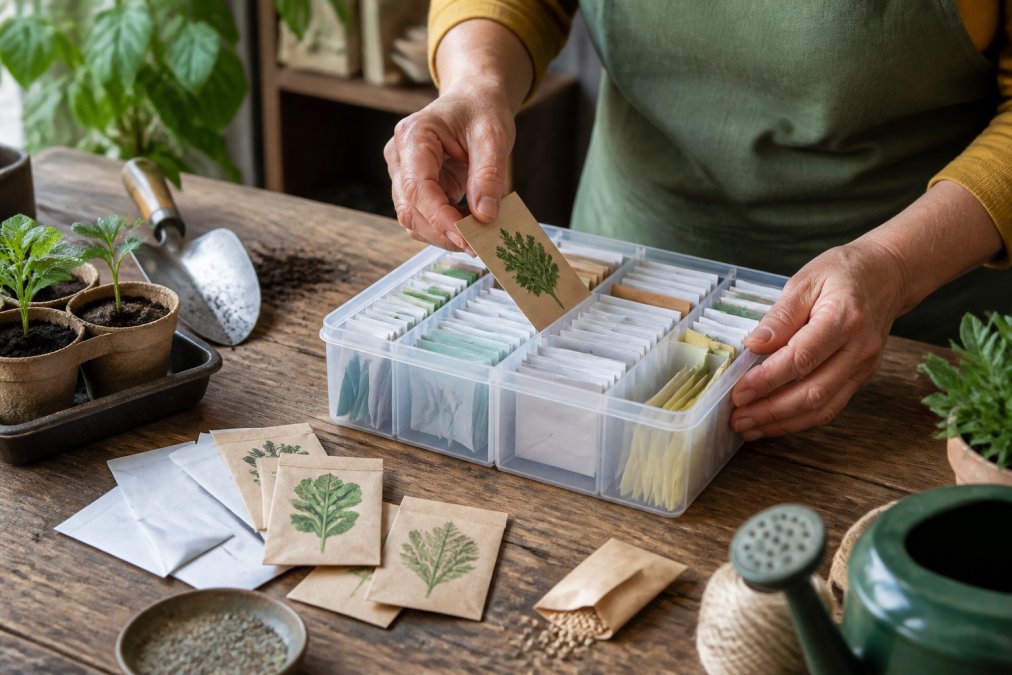
Organize garden seeds by category first, then alphabetically within each category, and label every compartment on the outside. That system means you never open more than one container to find what you need.
Here's the setup process, start to finish:
- Sort seeds into groups: vegetables, herbs, flowers, and any specialty varieties.
- Discard expired or moldy packets before they contaminate the rest.
- Fill each vial or envelope with one variety, then seal it.
- Label with variety name, harvest year, and planting depth.
- Arrange alphabetically within each group.
- Store the whole system in a cool, dark, dry location.
Setup takes minutes, not hours, and requires no special tools.
Labeling Systems That Actually Work
Fading labels are the silent killer of seed organization. Marker smudges, tape peels, and within a season you're staring at unmarked envelopes wondering which one is the basil.
Use these rules:
- Write on the label, not the packet, using permanent ink.
- Include the year collected or purchased. Viability drops over time, and you need to know what's fresh.
- Add a germination note after your first test so future-you knows what performed.
A labeling system only works if it survives a full year in storage. Test yours before committing the whole collection to it.
Protecting Seeds from Moisture and Pests
Moisture and pests are the two threats that turn a full seed collection into a wasted one. Both are preventable with the right container and a few cheap additions.
Moisture control starts with an airtight seal. Silica gel desiccant packets absorb ambient humidity inside the container and cost almost nothing to replace each season. For pest protection, the container itself is the first line of defense: a sealed case keeps pantry moths, weevils, and rodents out entirely. Adding a bay leaf or a few drops of food-grade diatomaceous earth inside the storage area discourages insects without harming the seeds.
Temperature matters too. A cool, stable spot, ideally in the dark, slows the metabolic processes that cause seeds to lose viability. Basements and interior closets beat garages and windowsills.
University of Minnesota Extension on storing seeds
Size Compatibility: Matching Storage to Your Collection
Buying too much organizer for a 20-variety collection wastes space and money. Buying too little means you're back to scattered bags by mid-season. The right size depends on three numbers: how many varieties you actually have, how many packets or envelopes each variety occupies, and how fast your collection grows each year.
Count Varieties, Not Packets
Most gardeners underestimate their collection because they count packets, not varieties. A single tomato variety might have three packets from three different years. Group by variety first, then decide how many slots you need.
- Under 30 varieties: A single small case with removable dividers. A 4x6 photo storage case with 16 to 24 slots handles this if you double up small envelopes.
- 30 to 80 varieties: A mid-size organizer with individual compartments and a labeling system included. Look for at least 60 slots so you have room for next year's additions.
- 80 to 120+ varieties: A full kit like the WALERICA system, which handles up to 120 varieties in one water-resistant case.
- Growers expanding yearly: Choose a modular system you can add to, not a fixed box. A fixed 40-slot case becomes a bottleneck the second season you save seed.
A common mistake is buying for the collection you hope to have in five years and drowning in empty compartments today. Buy for next season, with about 20 percent room to grow.
The Long-Term Cost-Benefit Math
No ranking result does this comparison, so here it is. The question isn't whether an organizer costs money. It's whether the seeds you lose without one cost more.
Run the numbers on your own collection:
- Replacement cost per variety. Heirloom and specialty seeds often run $3 to $6 per packet. A 60-variety collection represents roughly $180 to $360 in seed value.
- Germination loss from poor storage. Seeds stored in open bags or warm rooms lose viability faster than seeds kept cool, dark, and dry. A common pattern is that a portion of a poorly stored collection fails to germinate at its rated rate, forcing mid-season replacements.
- Time cost. Hunting through mismatched bags and unlabeled envelopes adds up. Even 15 minutes per planting session across a season is hours you don't get back.
- Break-even. If a $49.99 organizer prevents even 10 to 15 failed packets over its lifetime, it has paid for itself. Most gardeners hit that within one or two seasons.
The math flips for very small collections. If you grow five varieties and replace them every year anyway, a shoebox and a desiccant packet is the rational choice. The organizer wins once your collection is large enough, valuable enough, or old enough that losing it hurts.
Environmental Impact of Seed Storage Materials
Plastic gets a bad reputation, but a durable seed organizer is usually the more sustainable choice over time. A single rigid case that lasts a decade replaces hundreds of disposable ziplock bags, and it keeps seeds viable longer, which means fewer replacements shipped and fewer failed plantings.
Wood and fabric options look greener but often fail faster and need replacing. The most sustainable container is the one you keep using. Pairing a long-lasting organizer with reusable envelopes and refillable desiccant sachets cuts waste further, and it aligns with the broader practice of saving and preserving seed varieties rather than buying new each year.
Conclusion: Is a Seed Organizer Worth It for You?
If you're managing more than a handful of varieties, or you've invested in seeds you can't easily replace, a seed organizer pays for itself within a season. The math is simple: protected seeds germinate better, last longer, and don't need replacing.
For gardeners ready to stop losing seeds to humidity and clutter, the WALERICA Seed Storage Organizer Kit from Moderno Top Shop holds up to 120 varieties, includes envelopes, labels, and essential tools, and features a water-resistant, travel-ready design you can set up in minutes. Get your WALERICA kit and start every planting season organized, labeled, and ready.
Frequently Asked Questions
How long do seeds stay viable in storage?
Most vegetable seeds last 2 to 5 years when stored in cool, dark, and dry conditions. Onions and parsnips have shorter lives, around 1 to 2 years, while beans and cucumbers can stay viable for 5 years or more. A seed organizer with airtight vials and a desiccant packet helps maintain consistent conditions, extending shelf life compared to open boxes or paper bags.
Are plastic organizers better than paper envelopes for seeds?
Plastic organizers offer better protection against humidity and pests than paper envelopes alone. Paper breathes, which allows moisture fluctuations that reduce germination rates over time. A plastic seed organizer with individual vials creates a barrier against damp air and insects. You can still use paper envelopes inside the vials for labeling, combining breathability with external protection.
How do I keep track of seed planting dates?
Use a labeling system that includes the variety name and the year you stored or purchased the seeds. Write directly on the vial or use included labels, then keep a simple inventory list in a notebook or spreadsheet. Some gardeners sort vials by planting season or expiration year so older seeds get used first. A seed organizer with clear compartments makes it easy to spot and rotate older stock.
Is a seed organizer worth it if I only have 30 varieties?
Yes, if you want to protect your seeds and avoid buying replacements each spring. A smaller collection still benefits from airtight storage and organized labeling. Many organizers, including the WALERICA kit with 120 slots, let you expand later without rebuying. The upfront cost is offset by seeds that last longer and fewer duplicate purchases.
