

Seed Storage Kit Guide: Organize 120+ Varieties
Table of Contents
- Why a Seed Storage Kit Matters for Home Gardeners
- How to Organize Garden Seeds: Step-by-Step Setup
- Best Seed Storage Containers and What to Look For
- Long-Term Seed Preservation Tips for Maximum Viability
- WALERICA Kit Features: What's Included and How It Works
- DIY vs. Dedicated Kits: When Investment Pays Off
- Frequently Asked Questions
Last Updated: September 3, 2026
Why a Seed Storage Kit Matters for Home Gardeners
A dedicated seed storage kit transforms scattered seed packets into a protected, organized collection ready to plant whenever needed. Home gardeners often underestimate how quickly seeds deteriorate, temperature fluctuations, humidity, and light exposure degrade viability over time. Without proper organization, you lose track of what you have, when you planted it, and whether seeds are still usable, leading to wasted money and failed plantings.

A quality seed storage kit protects seeds from environmental damage, keeps varieties separated and labeled, and creates a system you can maintain effortlessly. Whether managing 30 varieties or 120, the right kit eliminates chaos and ensures your seed collection is preserved properly.
How to Organize Garden Seeds: Step-by-Step Setup
Step 1: Gather Your Seeds and Supplies Collect all seed packets in one location with your storage kit, labels, and organizational tools ready. This immediately shows you exactly what you own and reveals duplicates or forgotten packets.
Step 2: Sort by Category or Preference Organize by plant type (vegetables, herbs, flowers), planting season (spring, summer, fall, winter), or alphabetically. Choose the system that matches how your mind works.
Step 3: Label Each Compartment or Vial Use waterproof labels to mark each storage section with variety name, planting date, and expected viability window. Legible labels prevent confusion and help you rotate older seeds first.
Step 4: Place Seeds in Individual Compartments Transfer seeds from original packets into dedicated storage compartments. Keep original packet information accessible for planting depth, spacing, and germination requirements.
Step 5: Seal and Store in Optimal Conditions Close your storage kit and place it in a cool, dry location away from direct sunlight. Basements, closets, or pantries work well; avoid kitchen counters, windowsills, or areas near heat sources.
Best Seed Storage Containers and What to Look For
Airtight and Hermetic Design The container must seal tightly to prevent moisture infiltration. Seeds stored in open boxes absorb humidity from the air, triggering premature germination or fungal growth. Look for sealed lids, snap closures, or rubber gaskets that create an airtight barrier.
Water-Resistant Materials The outer shell should resist moisture penetration. Plastic containers with reinforced seams and sealed compartments work better than cardboard boxes or paper envelopes.
Individual Compartments or Vials Separating seeds by variety prevents cross-contamination and makes identification instant. Labeled compartments or resealable pouches keep each variety distinct and protected.
Transparent or Translucent Housing Being able to see your seed collection at a glance saves time and prevents duplicate purchases. Transparent containers let you scan inventory quickly without opening the lid repeatedly.
Included Accessories Quality kits include labels, markers, and sometimes small tools for transferring seeds, eliminating the need for separate purchases.
Portability and Compact Design A portable kit matters if you move between garden spaces or manage multiple growing areas. Compact designs fit shelves, drawers, or travel bags without excessive space.
Long-Term Seed Preservation Tips for Maximum Viability
Proper storage extends seed viability far beyond standard expectations. Seeds stored correctly can remain viable for 3-5 years or longer, depending on variety.
The Science of Seed Deterioration
Seeds are living organisms in dormancy. Viability declines through moisture absorption and oxidation. When seeds absorb water, enzymes activate and metabolic processes resume, but without nutrients and light for germination, this exhausts the seed's energy reserves. Oxidation similarly damages seed cell membranes and genetic material. A dedicated kit with airtight sealing and desiccant packets slows both processes dramatically.
Temperature fluctuations accelerate degradation. Each 10°F increase in storage temperature roughly halves seed lifespan. A seed stored at 70°F with 50% humidity may remain viable for 2 years; the same seed at 40°F with 30% humidity may remain viable for 8 years.
Maintain Cool Temperatures
Store seeds between 40-50°F consistently. Fluctuating temperatures trigger dormancy cycles that exhaust seed energy reserves. Basements, root cellars, or refrigerators work well; avoid attics, garages, or spaces near heating vents. If using a refrigerator, place seeds in an airtight container on a shelf (not the door), away from the freezer compartment.
Control Humidity Levels
Excess moisture is the primary enemy of seed storage. Aim for humidity below 50%. Desiccant packets included in quality kits help maintain dry conditions. Replace these packets annually or when they become saturated, most turn color when saturated. For humid climates (above 60% ambient humidity), add a second desiccant packet or use silica gel beads rated for 40% relative humidity.
Protect from Light Exposure
Sunlight triggers germination signals in seeds. Store containers in dark spaces or opaque containers that block light. Even indirect window light accelerates seed aging over time.
Track Germination Rates to Predict Viability
Rather than guessing whether old seeds are viable, test them. Once per year, take 10 seeds from each variety stored longer than 2 years and perform a germination test: place them on a damp paper towel, roll loosely, place in a sealed plastic bag in a warm location (68-72°F), and count sprouts within the expected timeframe (typically 7-14 days). If 7 or more of 10 seeds germinate, viability is acceptable. If fewer than 5 germinate, plan to replace that variety before the next planting season.
Record results in a spreadsheet or notebook. Over time, you'll see which varieties decline fastest and can adjust purchasing or seed-saving priorities accordingly.
Keep a Digital or Physical Inventory System
Maintain a record of what you have, when you acquired it, when you last used seeds from each variety, and germination test results. A simple spreadsheet with columns for variety name, acquisition date, storage location, last germination test date, and germination percentage prevents buying duplicates or planting expired seeds.
Organize by Viability Window and Planting Season
Some seeds remain viable for 2-3 years while others last 5-7 years. Onion, carrot, and parsnip seeds have shorter viability windows (2-3 years); tomato, pepper, and bean seeds last 4-6 years. Group seeds by expected lifespan so you use shorter-lived varieties first. Within each viability group, organize by planting season so you naturally rotate stock.
WALERICA Kit Features: What's Included and How It Works
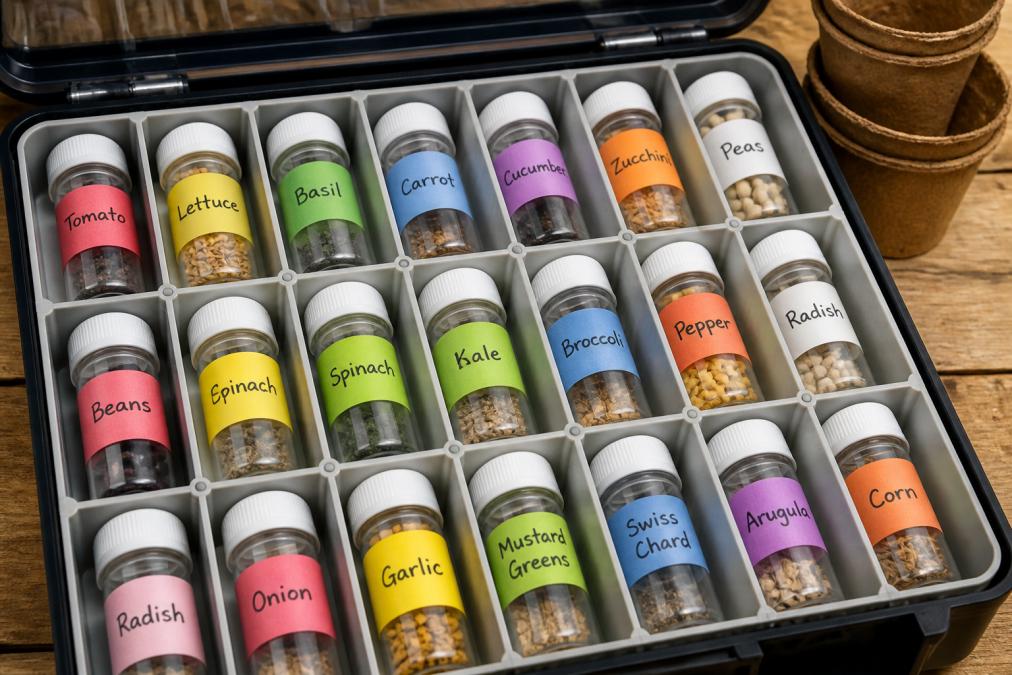
The WALERICA Seed Storage Organizer from Moderno Top Shop is purpose-built for gardeners who want their seed collection organized, protected, and ready to plant. This kit holds up to 120 varieties, making it suitable for serious home gardeners, small greenhouse operations, and dedicated seed savers.
Capacity and Organization System
The kit accommodates 120 individual storage vials, each designed to hold a standard seed packet's worth of seeds. This capacity covers most home gardening needs without excess empty space.
The organizational structure supports multiple sorting methods: alphabetically, by plant type, by planting season, or by harvest timeline. The flexibility means the system adapts to your preferred workflow rather than forcing a rigid structure.
Water-Resistant Design and Included Accessories
The WALERICA kit features a sealed container with a reinforced lid that creates an airtight barrier. The water-resistant construction protects against humidity, accidental spills, and environmental moisture, especially valuable in humid climates.
The kit includes essential accessories: adhesive labels, a marker for writing variety names and dates, and desiccant packets to maintain dry conditions. These included items eliminate separate purchases and ensure you have everything necessary to start organizing immediately. Replace desiccant packets annually or when saturated, a simple maintenance task that extends seed viability significantly.
The Walerica Seed Organizer Kit - 120 Slots Seed Storage Case from Moderno Top Shop is priced at $49.99, making it an affordable investment for gardeners serious about preserving their seed collection.
DIY vs. Dedicated Kits: When Investment Pays Off
Understanding the true cost of each approach, not just upfront price, but seed loss, time, and long-term viability, helps you make the right decision.
DIY Storage Approaches and Their Hidden Costs
Repurposing household items (mason jars, plastic containers, shoe boxes) costs little upfront, often $0-15 if using items already at home. This appeals to budget-conscious gardeners with small collections (under 20 varieties). However, DIY solutions often lack airtight sealing, proper labeling systems, and moisture control.
Seeds stored in open containers or loosely sealed jars absorb humidity quickly. In typical household conditions (50-60% humidity), seeds lose viability 3-4 times faster than in a sealed, desiccant-controlled environment. If you store 30 seed varieties in a DIY system and lose viability on 40% within 2 years (12 varieties), and each packet costs an average of $4, you've lost $48 in seeds. Add replacement costs ($48), and your DIY "savings" have evaporated.
DIY setups also demand more maintenance and create organizational chaos. Seeds scatter across multiple locations, some in the fridge, some in a drawer, some in a closet. You forget what you have, duplicate purchases, and lose track of planting dates. Most gardeners spend 30-60 minutes per season managing disorganized storage; a dedicated kit reduces this to 5-10 minutes.
Dedicated Kit Advantages: The True Value Proposition
A quality seed storage kit provides integrated protection: airtight sealing, moisture control via desiccant packets, organization via labeled compartments, and portability. The upfront investment ($40-60) pays for itself through reduced seed waste and eliminated duplicate purchases.
The WALERICA kit at $49.99 costs roughly $0.42 per variety slot. If you save just 12 seed packets over 3 years (conservative for a 50-variety collection), you've recovered the kit's cost. Most gardeners save 20-40 packets over 3 years, making the kit a 3-5× return on investment.
A kit also creates consistency and automation. Every season, your seeds are stored the same way, in the same location, with the same protection. You spend mental energy on what to grow, not where your seeds are or whether they're viable.
Lifecycle Cost Analysis: DIY vs. Kit Over 5 Years
For a gardener with 50 seed varieties:
DIY Approach (5-year cost):
- Initial setup: $10
- Seed replacement due to poor storage: $120 (40% loss rate, 20 packets × $4)
- Time cost: 40 hours at $15/hour = $600
- Total: $730
Dedicated Kit Approach (5-year cost):
- Initial kit: $50
- Desiccant replacement: $15 (3 replacements at $5 each)
- Seed replacement due to normal viability decline: $20 (5% loss rate)
- Time cost: 5 hours at $15/hour = $75
- Total: $160
The kit approach saves $570 over 5 years, or $114 per year.
When DIY Makes Sense
DIY solutions are reasonable if you're growing only 5-10 varieties for a single season, experimenting with gardening for the first time, have a naturally cool, dry storage space (basement below 50°F), or are willing to replace seeds annually rather than preserve them long-term.
When a Dedicated Kit Becomes Essential
Invest in a kit if you're storing 30+ varieties, want to preserve heirloom or specialty seeds for 3+ years, live in a humid climate (above 60% average humidity), have experienced seed failure in the past, save seeds from your own plants, or manage a small greenhouse or community garden plot.
Frequently Asked Questions
What is the best way to store garden seeds long-term?
Store seeds in cool, dry conditions between 32-41°F with humidity below 50% to preserve viability for years. A dedicated seed storage kit with sealed compartments protects against moisture and temperature fluctuations. Keep seeds away from direct sunlight and label each variety with the planting date. Using hermetic containers or resealable envelopes inside an organizer system maintains germination rates far longer than loose storage.
Do seed storage organizers prevent moisture damage?
Quality seed storage containers with water-resistant designs and sealed compartments significantly reduce moisture exposure. The WALERICA kit includes individual vials and desiccant protection to maintain dry conditions. However, storage location matters too, keep your organizer in a cool, dry area away from humidity sources. Combined with proper environmental conditions, a dedicated organizer virtually eliminates moisture-related seed deterioration.
How many seed packets can a standard storage kit hold?
Most dedicated seed organizers hold between 50-120 individual seed varieties. The WALERICA kit accommodates up to 120 varieties in separate vials, making it suitable for both casual gardeners with 30 varieties and serious collectors. The modular compartment design lets you organize by plant type, growing season, or alphabetically, so you can scale storage as your collection grows without needing multiple containers.
Is a seed storage kit worth the investment compared to DIY storage?
A dedicated kit offers organized labeling, moisture protection, and temperature stability that DIY solutions struggle to match consistently. Loose bags or repurposed containers don't prevent humidity damage or provide clear organization, leading to wasted seeds and lost planting opportunities. At $49.99, the WALERICA kit includes all accessories, labels, envelopes, tools, eliminating the need for additional purchases. For gardeners managing multiple varieties, the investment saves time, reduces waste, and extends seed viability significantly.
