

Best Seed Organizer for Small Greenhouses (2026 Guide)
Table of Contents
- Why a Dedicated Seed Organizer Beats Boxes and Bags
- Seed Storage Containers for Gardeners: Key Features to Compare
- Quick Comparison: Top Seed Organizer Options
- How to Organize Vegetable Seeds by Planting Season
- Best Practices for Seed Inventory Management in Small Spaces
- Protecting Seeds from Humidity, Light, and Pests
- Which Seed Organizer Should You Pick?
- Frequently Asked Questions
Last Updated: September 7, 2026
Why a Dedicated Seed Organizer Beats Boxes and Bags
The best seed organizer for small greenhouses combines airtight protection with clear labeling, because loose envelopes and shoeboxes fail on both counts. A seed organizer built for the job creates a cataloging system that survives a busy planting season. The difference between a dedicated case and a cardboard box comes down to three factors: moisture control, visibility, and longevity.
Most gardeners start by tossing seed packets into a plastic bin. Within months, labels fade, envelopes tear, and you buy duplicates of varieties you already own. A proper organizer gives every variety a fixed home. The WALERICA Seed Storage Organizer Kit, available through Moderno Top Shop, holds up to 120 individual vials.

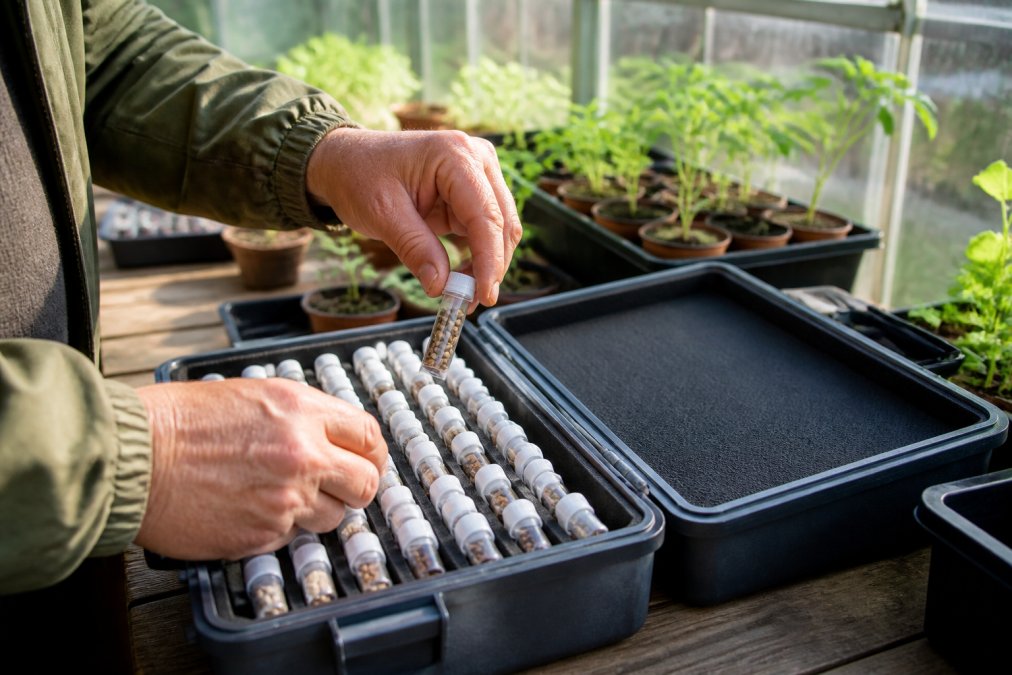
The hidden cost of improvised storage is wasted money. Seeds that get too warm, too damp, or too exposed to light lose germination rate faster than most people realize. A dedicated case with a water-resistant shell and individual vials keeps each variety sealed until sowing.
Seed Storage Containers for Gardeners: Key Features to Compare
When evaluating seed storage containers for gardeners, four specifications matter more than brand names: hermetic seals on individual compartments, rust and warp resistance in humid air, a reusable labeling system, and a footprint that fits your shelf space.
Airtight vials are the gold standard for seed storage containers for gardeners because they lock out humidity fluctuations. Greenhouse conditions swing between day and night, and that cycling moisture triggers premature sprouting or mold. The WALERICA kit addresses this with 120 individual vials that seal independently, so opening one variety never exposes the rest to humid air.
Durability matters. Plastic bins crack in cold weather, and metal tins rust on damp shelves. A case with a water-resistant build and rust-resistant components survives years of seasonal use. The kit also includes labels and essential tools, so you are not hunting for a pen when you sort your spring order.
Quick Comparison: Top Seed Organizer Options
| Organizer Type | Capacity | Moisture Protection | Best For | Approx. Price |
|---|---|---|---|---|
| WALERICA Vial Kit | 120 varieties | Airtight individual vials | Serious greenhouse growers | $49.99 |
| Photo Storage Box | 30-50 packets | Low, paper envelopes | Casual gardeners | $10-$20 |
| Binder with Sleeves | 50-100 packets | Moderate, not sealed | Seed swapping | $15-$30 |
| Repurposed Tackle Box | 20-40 loose packets | Variable, not sealed | Quick weekend use | Free-$25 |
The table above shows why the best seed organizer for small greenhouses is rarely the cheapest upfront option. A $15 photo box holds packets but does not protect them from humidity or make them easy to browse. The WALERICA kit at $49.99 costs more initially, yet it eliminates the recurring expense of replacing seeds that went bad in storage.
For gardeners with only 20 or 30 varieties, a 120-vial case might seem oversized. In practice, that capacity becomes useful within two seasons as you collect varieties and save seeds. The case is compact enough for a shelf or drawer.
How to Organize Vegetable Seeds by Planting Season
Learning how to organize vegetable seeds by season turns a random collection into a planting calendar. Start by emptying every packet and vial onto a table, then sort them into three piles: cool-season crops, warm-season crops, and herbs or flowers. This first pass tells you what you can sow now and what needs to wait.
Once sorted by season, assign each variety a vial and write the crop name, variety, and year on the label. Group vials so cool-season crops sit on one row and warm-season crops on another. This layout mirrors your planting schedule, so when March arrives you grab the cool-season row and start sowing.
The system works best when you also track sowing dates. A note on each vial, such as "sow indoors 6 weeks before last frost," saves you from consulting a chart every spring. Organizing by season rather than alphabetically reduces the mental load of planning.
Best Practices for Seed Inventory Management in Small Spaces
Effective seed inventory management in a compact greenhouse comes down to a simple rule: if you cannot see it, you will buy it again. The best practices all point toward making your collection visible and searchable within seconds.
Adopt a numbering system if you grow more than 40 varieties. Assign each crop a number and keep a notebook or notes app list that matches numbers to varieties. This keeps the physical case tidy while maintaining a searchable database of what you own and what is running low.
For small spaces, vertical storage beats horizontal spread. A vial case that closes flat and stands upright uses less bench space than a sprawling binder system. Keep the organizer away from direct sunlight and heat sources, since both accelerate seed aging.
Know Your Seed Lifespans: A Species-by-Species Guide
Not all seeds age at the same rate. Under cool, dry conditions, some species remain viable for a decade or more, while others lose germination power within a year. This table reflects typical storage life under good conditions (below 70°F, below 50% relative humidity):
| Botanical Family | Examples | Typical Storage Life | Notes |
|---|---|---|---|
| Alliaceae | Onions, leeks, chives | 1-2 years | Among the shortest-lived seeds; buy fresh annually |
| Apiaceae | Carrots, parsley, dill | 2-3 years | Oil-rich seeds degrade quickly |
| Asteraceae | Lettuce, sunflowers, zinnias | 3-5 years | Lettuce holds well if kept dry |
| Brassicaceae | Cabbage, broccoli, radish | 4-6 years | Reliable and forgiving |
| Cucurbitaceae | Squash, cucumbers, melons | 5-8 years | Thick seed coats protect them |
| Fabaceae | Beans, peas | 3-5 years | Watch for weevil damage |
| Solanaceae | Tomatoes, peppers, eggplant | 4-7 years | Tomato seeds often exceed expectations |
Use this table to set rotation priorities. If you have onion seeds from two seasons ago and fresh tomato seeds, sow the onions first. Write the purchase year on every label, not just the variety name, so you can spot aging stock at a glance.
Where to Place Your Organizer Inside the Greenhouse
Temperature stability matters more than absolute coolness. A shelf near the ridge gets hot during the day and cold at night. A lower shelf near the north wall stays closer to ambient soil temperature, which fluctuates less.
Avoid these spots:
- Above or beside a propane heater, temperature spikes can exceed 100°F
- On a south-facing windowsill, direct sun accelerates aging
- On the floor, concrete wicks moisture and invites pests
- Near the misting system or propagation mat, chronic high humidity
If your greenhouse lacks a stable cool zone, store seeds in the house during summer and move them to the greenhouse only during the growing season.
The Inventory Audit: A 15-Minute Seasonal Check
Twice a year, before spring sowing and after fall cleanup, run a quick audit. Open the case, pull every vial, and check three things: seed count, label legibility, and signs of moisture or pests.
A simple germination test saves money: place 10 seeds on a damp paper towel, fold it, and seal it in a plastic bag. Keep it warm for 7-10 days and count how many sprout. If fewer than 6 of 10 germinate, sow more thickly; if fewer than 3, replace it.
Protecting Seeds from Humidity, Light, and Pests
The three silent killers of stored seeds are humidity, light, and insects, and each requires a different defense. Humidity is the most destructive, because moisture triggers germination or rot. Keep relative humidity below 50 percent.
Light exposure degrades seed quality over time, even for varieties that need light to germinate once planted. Storage should be opaque or kept in a dark cabinet. The WALERICA case uses a solid, water-resistant shell that blocks light.
Pest control is the angle most storage guides miss. Weevils and other pantry insects will happily eat through paper seed packets. Sealed vials create a physical barrier insects cannot penetrate, another reason to move away from envelope-based storage.
The Greenhouse Humidity Problem Most Guides Ignore
A small greenhouse is not a stable storage environment. During a sunny afternoon, internal temperatures can climb 20-30°F above outdoor air, dropping relative humidity dramatically. At night, the structure cools and condensation forms on glazing and shelving. That daily swing degrades seed coats and triggers premature aging.
Most seed storage advice assumes a climate-controlled home interior. Inside a greenhouse, you need a buffer between the seeds and the ambient air. A sealed vial provides that buffer, but only if the seal is genuinely airtight. Test it: close an empty vial and submerge it in water for 10 seconds. If bubbles escape, the seal will also exchange humid air.
Silica gel packets are a useful addition in humid months. Place one or two in the main case compartment, not inside individual vials, to absorb moisture that enters when you open the case. Replace or recharge them monthly during July and August.
Pest Control: The Missed Layer of Protection
The most common seed pests in American greenhouses are the rice weevil (Sitophilus oryzae), the sawtoothed grain beetle (Oryzaephilus surinamensis), and the Indian meal moth (Plodia interpunctella). All three can chew through paper packets, and none respect a cardboard box. The larvae of the Indian meal moth spin silken threads that bind seeds together, ruining entire batches.
A sealed plastic or glass vial stops adult insects from reaching the seeds, but it does nothing for eggs already inside the packet when you bought it. To address this, freeze new seed shipments for 48 hours before transferring them to your organizer. This kills eggs and larvae at all life stages without harming germination in most species.
Inspect your organizer quarterly. Look for fine dust at the bottom of vials, pinholes in seed coats, or webbing between seeds. If you find an infestation, discard the affected vials entirely, do not try to salvage seeds by sifting.
Material Trade-Offs: Plastic vs. Glass vs. Metal
Most organizers use plastic vials, and for good reason: they are lightweight, shatterproof, and inexpensive. But not all plastics are equal. Polypropylene (recycling code 5) resists moisture and temperature cycling well. Polycarbonate is more impact-resistant but can yellow with UV exposure. Avoid polystyrene (code 6), which becomes brittle in cold conditions.
Glass vials offer superior moisture barriers and are infinitely recyclable, but they add weight and break risk. If you choose glass, ensure the case has foam or dividers between vials. Metal tins with rubber gaskets are excellent for moisture exclusion but can rust in humid air unless powder-coated or stainless steel.
Plastic organizers last for years if cared for, which offsets their petroleum footprint. Biodegradable options, such as molded fiber trays, break down in humid conditions and offer no moisture protection, they are unsuitable for greenhouse storage. The most eco-friendly choice is a durable plastic case you keep for a decade.
Which Seed Organizer Should You Pick?
For most small greenhouse owners, the answer is a vial-based system with airtight seals and a water-resistant exterior. The best seed organizer for small greenhouses balances capacity against footprint, and the WALERICA Seed Storage Organizer Kit from Moderno Top Shop delivers that balance at $49.99. It holds 120 varieties in individual vials, includes labels and essential tools, and sets up in minutes.
If you are just starting out with fewer than 15 varieties, a simple photo box may be enough for one season. But the moment you start saving seeds from your own plants or buying interesting varieties online, the limitations of envelope storage become obvious.
A good seed organizer is not a luxury. It is the difference between a collection that grows every year and one that quietly dies in a drawer. The WALERICA kit protects your seeds from humidity, light, and pests while keeping every variety labeled and ready for the next planting season.
Frequently Asked Questions
What is the best way to store seeds for long-term viability?
For long-term viability, seeds need a cool, dry, and dark environment. The ideal conditions are a consistent temperature between 40-50°F and low humidity. A dedicated seed organizer with airtight vials protects seeds from moisture and light. Always include a silica gel packet to absorb any residual humidity. Avoid storing seeds in warm, bright areas like a windowsill or above appliances, as temperature fluctuations reduce germination rates.
How do you organize a large collection of vegetable seeds?
Organize by planting season first, then by crop family. Group cool-season crops like lettuce and peas together, separate from warm-season crops like tomatoes and peppers. Inside a 120-slot organizer, dedicate rows to each group. Label every vial immediately with the plant variety and the year you stored it. This system makes it easy to find seeds and plan your greenhouse layout for the upcoming season.
Do seed organizers help prevent moisture damage in greenhouses?
Yes. Greenhouses have high humidity, which is the main threat to seed viability. A quality seed organizer uses water-resistant materials and individual airtight vials to create a barrier against moisture. This is far more effective than paper envelopes, which absorb humidity and can lead to mold. For extra protection in very humid climates, keep your organizer sealed and add a desiccant packet inside the case.
How long do vegetable seeds typically last when stored properly?
Most vegetable seeds last 2 to 5 years when stored in a cool, dry, and dark place. Onions, parsnips, and sweet corn have shorter lifespans, often lasting only 1 to 2 years. Cucurbits like cucumbers and melons, along with tomatoes and peppers, can remain viable for 5 years or more. Proper storage in airtight containers is critical to reaching these maximum lifespans.
Getting your seed collection under control takes one afternoon and the right storage system. Moderno Top Shop offers the WALERICA Seed Storage Organizer Kit, which holds up to 120 varieties in water-resistant, airtight vials with labels and tools included. Get your WALERICA kit and start every planting season with a clear view of what you own.
