
How to Start a Profitable Greenhouse Business
Last Updated: November 12, 2026
Quick Summary
A greenhouse business becomes profitable when revenue from crops sold exceeds the combined cost of structure, energy, labor, and inputs, and when production per square foot stays high enough to justify the space. Profitability is designed before the first seed goes in, not discovered at harvest, so plan crop selection, production efficiency, and sales channels together.
- Profit margin comes down to the gap between cost per square foot and revenue per square foot.
- The most common budgeting mistake is underestimating growing systems and utilities while over-focusing on the structure.
- Profitability improves as you spread fixed costs over more sellable plants, so production efficiency and crop turnover matter.
- Market validation should happen before you plant: confirm what buyers purchase and in what quantity.
- Work backward from your target selling season and set milestones for each phase of the launch.
Table of Contents
- What Makes a Greenhouse Business Profitable
- How Much Does It Cost to Start a Greenhouse Business
- Greenhouse Business Startup Costs and Profits
- Most Profitable Greenhouse Crops for Your Operation
- Building Your Greenhouse Business Plan Template
- Sales Channels and Market Validation
- Permits, Zoning, Insurance, and Risk Planning
- Your First-Year Launch Roadmap
- Frequently Asked Questions
What Makes a Greenhouse Business Profitable
A greenhouse business becomes profitable when revenue from crops sold exceeds the combined cost of structure, energy, labor, and inputs, and when production per square foot stays high enough to justify the space. The keyword here is "how to start a profitable greenhouse business," and the honest answer is that profitability is designed before the first seed goes in, not discovered at harvest.
Three levers decide whether you make money: crop selection, production efficiency, and sales channel. Get any one wrong and the others cannot rescue you. A greenhouse full of slow-turn, low-margin crops sold wholesale will lose money no matter how well you grow them.
Profit margin in a greenhouse operation comes down to the gap between cost per square foot and revenue per square foot.
How Much Does It Cost to Start a Greenhouse Business
Startup costs for a greenhouse business fall into five buckets: structure and site prep, growing systems, initial plant stock and seed, business compliance, and a working-capital reserve. The structure is often a large single line, and its cost depends on size, covering material, and whether you build or buy a kit. A realistic budget prices each bucket separately rather than working from a single "typical" number, because costs vary widely by region, size, and whether you start with a small hoop house or a full commercial range. For a detailed urban garden cost breakdown starting from zero, see the linked guide.
Here is an itemized planning model for a small start-up selling starts, herbs, and cut flowers through direct channels. Treat the figures as planning placeholders to replace with local quotes, not as promises:
| Cost bucket | Line items to price | Planning note |
|---|---|---|
| Structure and site prep | Frame or kit, covering, foundation, grading, electrical hookup, water line | Get three quotes; kit price excludes delivery and assembly labor |
| Growing systems | Benches, irrigation and misting, heating, ventilation fans, shade cloth, grow lights, soil mix, containers | Often underestimated; run costs can exceed the frame cost to buy |
| Plant stock and seed | Seed, plugs, liners, bulbs, potting soil, fertilizer, crop protection | Scales with production; buy in phases tied to your crop plan |
| Business compliance | Business registration, licenses, zoning review, insurance premiums | Verify with your state and locality; do not assume |
| Working capital | Energy, labor, delivery, marketing, contingency | Cover at least one full production cycle before first revenue |
A worked break-even check makes the model actionable. Estimate your total fixed costs for the year (structure depreciation, base utilities, insurance, registration). Estimate revenue per square foot for each crop by multiplying expected yield per square foot by your direct-sale price.
Cash flow matters as much as total cost. Revenue from spring starts and holiday potted plants arrives in bursts, while heating and labor bills arrive monthly. Map month-by-month cash in and cash out for the first year and identify the lowest point; that is the working-capital reserve you must fund up front.
Watch out: the most common budgeting mistake is underestimating growing systems and utilities while over-focusing on the structure. Heating, ventilation, and irrigation often cost more to run than the frame cost to buy, and a budget that ignores the first winter's energy bill will run short before the first selling season ends.
Greenhouse Business Startup Costs and Profits
Profits in a greenhouse business depend on matching the startup investment to a realistic production plan. A small operation selling starts and herbs at local markets has a very different cost and revenue profile than a wholesale range supplying garden centers.
The key distinction is fixed versus variable costs. Fixed costs, like the structure and basic utilities, are there whether you grow one tray or a thousand. Variable costs, like seed, soil, and seasonal labor, scale with production. Profitability improves as you spread fixed costs over more sellable plants, which is why production efficiency and crop turnover matter so much.
Two planning resources help here. If you are weighing whether to invest in climate and irrigation controls, a greenhouse automation cost-benefit analysis breaks down the trade-off. If energy is a major line item, see how solar power integrates into greenhouse operations to reduce long-term operating costs.
Most Profitable Greenhouse Crops for Your Operation
Many growers favor high-value, fast-turn crops with strong local demand, such as tomatoes, cut flowers, winter greens, and flowering potted plants. These crops reward intensive production because they generate revenue per square foot quickly and sell well through direct channels.
Crop selection should follow demand, not habit. Dense crops like greens and herbs suit small spaces and steady market sales. Tomatoes and cut flowers carry higher price points but need more light, heat, and labor.
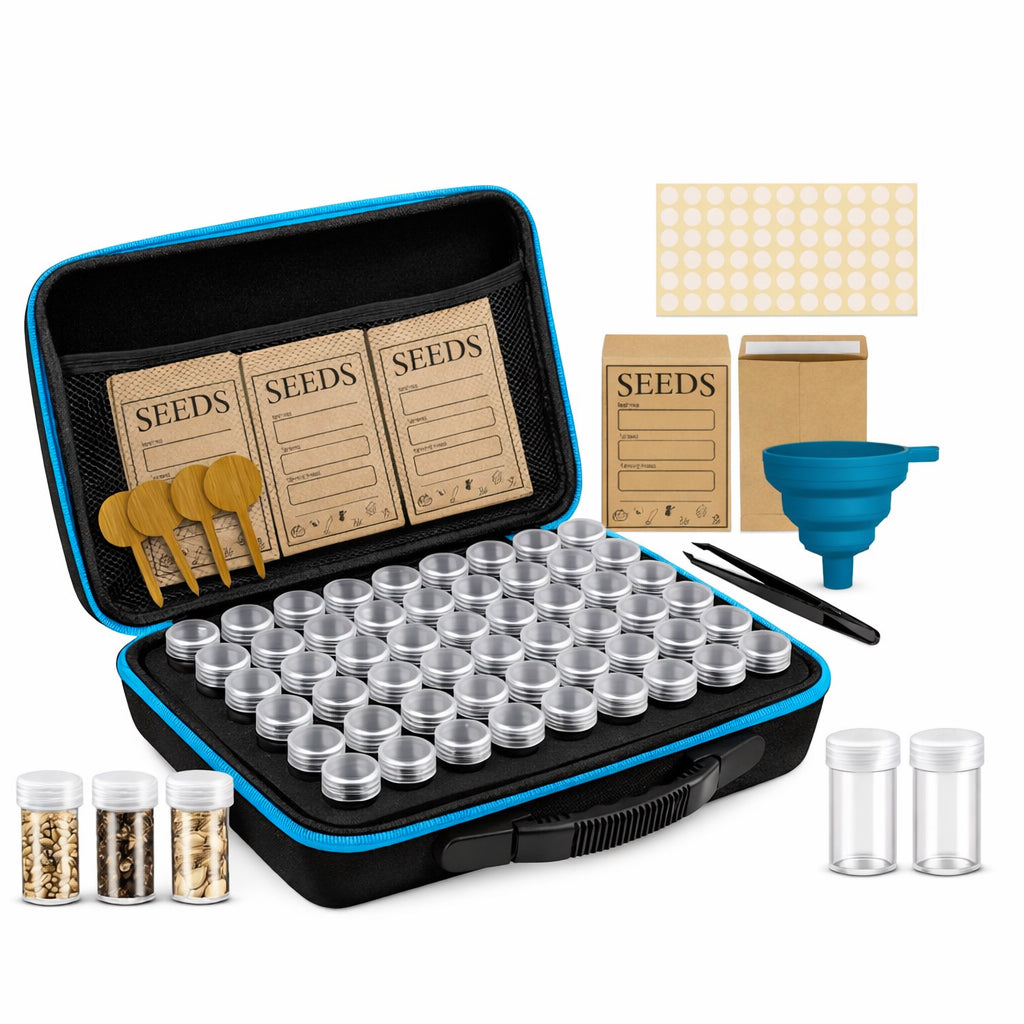
The practical move is to organize your seed inventory by crop and planting date before the season starts. A seed storage organizer kit with 120 labeled jars keeps varieties separated and easy to find, which matters when you are running several crops on staggered schedules.
Building Your Greenhouse Business Plan Template
A greenhouse business plan template should cover eight sections: business summary, market analysis, crop plan, production system, sales channels, operating budget, risk plan, and launch timeline. Each section answers one question a lender or partner will ask.
The crop plan and operating budget are the two that separate a real plan from a wish list. The crop plan states what you grow, when, and in what quantity. The operating budget states what it costs to produce and sell it, month by month.
Here is a simple planning table to structure the first pass:
| Plan Section | What It Answers | What to Include |
|---|---|---|
| Crop plan | What and when you grow | Crop list, planting dates, quantities |
| Production system | How you grow it | Growing method, space, equipment |
| Operating budget | What it costs | Labor, energy, inputs, overhead |
| Sales channels | How you sell | Direct, wholesale, local markets |
| Risk plan | What could go wrong | Contingency for weather, pests, demand |
Sales Channels and Market Validation
Sales channels for a greenhouse business split into direct sales and wholesale sales, and each carries a different margin and workload. Direct sales through local markets, farm stands, and Community Supported Agriculture shares return higher margins but demand more of your time. Wholesale sales to garden centers and florists move volume but compress margin.
Market validation should happen before you plant. Talk to the buyers you intend to sell to, confirm what they actually purchase and in what quantity, and price your crops against that demand. A common mistake is growing first and hunting for buyers second.
Direct sales reward relationships. Local markets and repeat customers pay for quality and consistency, and they forgive a small operation far more readily than a wholesale buyer will.
Permits, Zoning, Insurance, and Risk Planning
Compliance and risk planning are the two areas new growers most often skip, and both are cheap to do early and expensive to skip. This section gives a practical checklist rather than a general warning.
Business registration and taxes. Choose a legal structure (sole proprietorship, LLC, or other) and register with your state, then obtain any required local business license.
Insurance. Price general liability, property coverage for structures and equipment, and crop insurance early. Ask whether your policy covers greenhouse structures under wind and snow load, and whether product liability applies to edible crops sold direct.
Risk management plan. Build a written plan covering the events most likely to hurt a greenhouse operation, with a mitigation step for each:
| Risk | Mitigation |
|---|---|
| Crop failure or poor germination | Stagger plantings; keep backup seed; test germination before the season |
| Pests and disease | Scouting schedule, sanitation between crops, integrated pest management |
| Extreme weather (wind, snow, hail, heat) | Structural rating check, backup heat and ventilation, shade and hail netting |
| Equipment breakdown | Maintenance log, spare parts for critical pumps and fans, backup power plan |
| Price volatility and demand swings | Diversify crops and channels; pre-sell to confirmed buyers |
| Supply disruption | Second supplier for seed, soil, and containers; buffer inventory |
Fund the plan with a contingency line in your operating budget sized to your largest single risk, and review it each season.
Your First-Year Launch Roadmap
A first-year launch roadmap keeps the startup from becoming an endless planning exercise. Work backward from your target selling season and set milestones for each phase.
- Validate demand by talking to intended buyers and confirming quantities.
- Finalize your crop plan and order seed and inputs.
- Confirm zoning, registration, and insurance.
- Build or install the structure and growing systems.
- Start crops on a schedule matched to your frost dates.
- Open your first sales channel and track cost per crop.
New growers mapping their first season should plan seed starting dates carefully around local frost dates; this guide to planning seed starting dates from frost dates walks through the timing. Keep your seed inventory labeled and organized from day one so each planting is traceable.
Starting a profitable greenhouse business is a planning problem more than a growing problem. The growers who succeed treat crop selection, cost tracking, and market validation as one connected system, and they keep their seed inventory organized so every season starts clean. WALERICA's Seed Storage Organizer Kit holds up to 120 seed storage vials and includes labels, clips, tweezers, a funnel, and accessories, so your seed collection stays sorted and ready for each planting.
Frequently Asked Questions
Is owning a greenhouse business profitable?
A greenhouse business can be profitable, but results depend on crop selection, pricing, labor efficiency, and sales channels. High-value crops like tomatoes, cut flowers, and flowering potted plants tend to offer stronger margins than low-cost staples. Profitability also requires careful tracking of startup costs, operating expenses, and your break-even point. Many growers start small, validate demand locally, and expand as revenue stabilizes.
What is the most profitable thing to grow in a greenhouse?
The most profitable greenhouse crops are usually high-value, fast-turnover plants with strong local demand. Tomatoes, cut flowers, winter greens, and flowering potted plants are common choices. Dense crops and fast-growing varieties help maximize revenue per square foot. Your best option depends on your climate, growing methods, and customer base, so test a few crops before committing to a full production plan.
How much does it cost to start a greenhouse business?
Startup costs vary widely based on greenhouse size, structure type, and growing methods. Major expenses include the greenhouse structure, irrigation, heating and ventilation, seeds, soil, and permits. Operating costs like labor, energy, and maintenance continue after launch. Build an itemized budget in your greenhouse business plan template so you can estimate your break-even point and return on investment before you invest.
What permits or licenses might a greenhouse business need?
A greenhouse business may need business registration, zoning approval, and permits related to water use, runoff, or structures. Insurance coverage for property, liability, and crops is also worth reviewing. Requirements vary by state and locality, so confirm details with your local planning office before building. Include these steps in your greenhouse business plan template to avoid delays.
How do you find customers for a greenhouse business?
Start with market research to confirm local demand for your crops. Then test sales channels like direct sales at farmers markets, wholesale sales to garden centers, florists, and local markets. A step-by-step market validation process helps you avoid overproducing. Many growers begin with a small customer base, gather feedback, and expand their sales channels as production efficiency improves.
Can you start a profitable greenhouse business from home?
Yes, many growers start a greenhouse business from home with a small structure and a focused crop plan. Starting small lowers capital investment and lets you test market demand before scaling. Use intensive production methods and fast-growing crops to make efficient use of limited growing space. Track labor hours and operating costs closely so you can plan your next growth step.

