

Water-Resistant Seed Organizer: Top Picks for 2026
Table of Contents
- Why Your Seed Collection Needs a Water-Resistant Organizer
- Walerica Seed Organizer Kit: The All-in-One Solution
- How to Organize Garden Seeds by Category and Season
- Long-Term Seed Storage Tips for Maximum Viability
- What to Look For in a Waterproof Seed Box
- Comparing Storage Options: DIY vs. Dedicated Kits
- Common Mistakes to Avoid When Storing Seeds
- Conclusion: Protect Your Garden's Future
- Frequently Asked Questions
Last Updated: September 8, 2026
Why Your Seed Collection Needs a Water-Resistant Organizer
A seed organizer is the difference between a chaotic drawer of unlabeled envelopes and a planting season that starts on time. Moisture is the single biggest threat to seed viability, and a water-resistant organizer is your primary defense against it.

Most gardeners discover this the hard way after a humid summer ruins an entire collection.
The right organizer creates a system where every variety has a place, every label is readable, and every packet stays dry. For serious gardeners, it's the foundation of a productive growing season.
Walerica Seed Organizer Kit: The All-in-One Solution
The Walerica Seed Organizer Kit from Moderno Top Shop is a solution for protection and organization in one package. This premium seed storage box holds up to 120 individual vials, giving you room to separate and label different seed varieties.
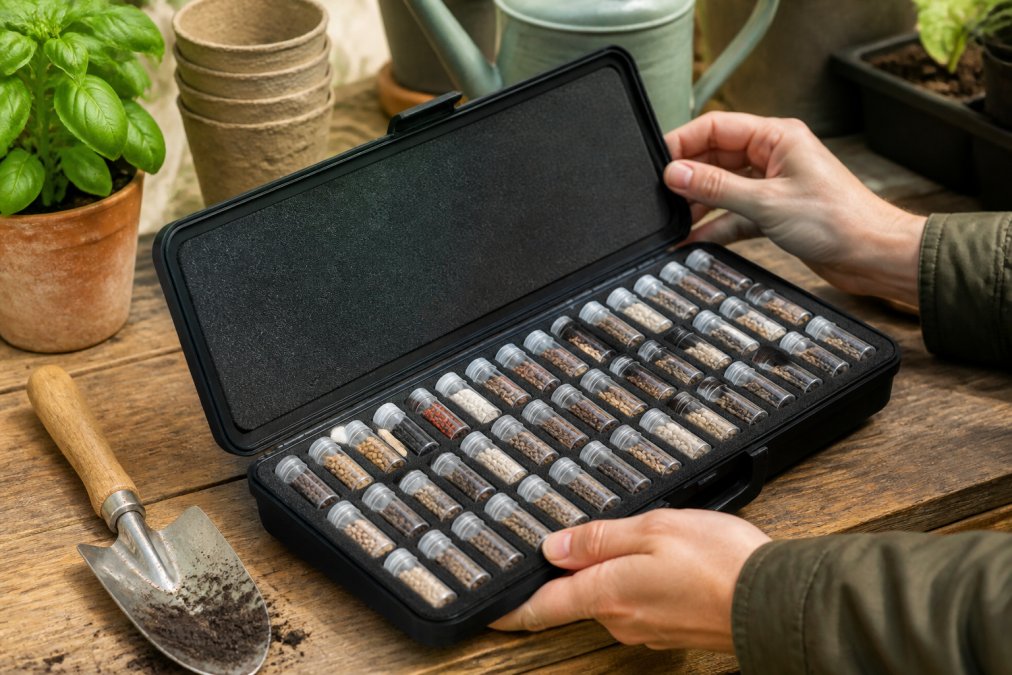
Its water-resistant design and travel-ready form factor shield contents from moisture and spills, whether in a garage, greenhouse, or community garden plot.
What's Included in the Kit
The kit arrives with everything you need: 120 individual storage vials, pre-printed labels, and essential tools for handling and sorting seeds.
Setup takes minutes. The modular design lets you sort by category, season, or planting priority without specialized equipment. No extra supplies are needed, the complete system works right out of the box.
How to Organize Garden Seeds by Category and Season
A practical approach starts with grouping by planting season, then by crop family within each season.
Start with these steps:
- Sort all seeds into four seasonal groups: spring, summer, fall, and winter planting
- Within each season, group by category such as vegetables, herbs, and flowers
- Assign each variety to its own vial and apply the corresponding label
- Arrange vials in the organizer by planting date, earliest first
- Keep a small notebook or digital list matching vial numbers to varieties
This system works whether you have 30 varieties or the full 120 capacity. The key is consistency, once in place, adding new seeds takes seconds.
Long-Term Seed Storage Tips for Maximum Viability
The container is only half the equation. A water-resistant organizer prevents external moisture, but true long-term viability depends on controlling temperature and humidity to put seeds into suspended animation.
The 50/50 Rule and the 40-Degree Threshold
Most seed viability research points to two thresholds: relative humidity below 50%, and storage temperature, for every 10°F above 40°F, a seed's lifespan can be cut in half. An air-conditioned closet works for short-term storage, but for seeds kept over a year, think colder and drier.
Matching Storage Strategy to Seed Type
Different seeds have different lifespans. A blanket approach leaves disappointing germination rates:
- Short-Lived (1-2 years): Onions, parsnips, and sweet corn are notoriously short-lived. They should be used within a year or two and are poor candidates for long-term banking. Prioritize these in your planting schedule.
- Mid-Lived (3-5 years): Most common vegetables, beans, carrots, lettuce, and tomatoes, fall here. Stored correctly in a cool, dark, dry place, they will perform reliably for several seasons.
- Long-Lived (5+ years): Cucurbits (squash, cucumbers, melons) and most brassicas (cabbage, kale) are remarkably resilient and can remain viable for five years or more under ideal conditions.
The Desiccant Strategy: A Deeper Dive
Silica gel absorbs moisture from the air inside the sealed container, but it is not a one-time fix.
- Type Matters: Use indicating silica gel (orange or blue) that changes color when saturated. This tells you when it needs to be recharged.
- Recharging: You can dry out saturated silica gel in a standard oven at 200°F for about two hours. This makes the system reusable and cost-effective.
- The Alternative: Rice (Not Recommended): While a common folk remedy, uncooked rice is a poor desiccant. It absorbs moisture much slower than silica gel and can harbor mold spores. It is better than nothing, but silica gel is the professional standard.
The Freezer Method: When to Use It
For seeds preserved over five years, a standard freezer (0°F) is powerful, the key is preventing condensation damage during the freeze-thaw cycle.
- Dry Thoroughly: Seeds must be bone-dry before freezing. If there is any residual moisture, ice crystals will form and rupture cell walls.
- Seal Airtight: Place seeds in an airtight, moisture-proof container (like a glass mason jar or a high-quality mylar bag).
- Thaw Slowly: When you need the seeds, remove the container from the freezer and let it come to room temperature for 24 hours before opening. This prevents warm, humid air from condensing on the cold seeds.
By understanding the specific needs of your seed types and controlling the microclimate, you transform your organizer from a simple storage box into a precision tool for preserving your garden's genetic resources.
What to Look For in a Waterproof Seed Box
Marketing throws around "waterproof" and "airtight" casually, but keeping moisture out is a matter of engineering. Look past the label to understand the seal and material mechanics, most listings never explain how a box achieves waterproofing.
The IP Rating: The Only Standard That Matters
In the U.S., no regulatory standard exists for a "waterproof seed box," but the Ingress Protection (IP) rating system is the closest objective measure. A rating like IP67 or IPX4 reflects a standardized test, not marketing.
- IPX4: Protected against splashing water from any direction. This is the minimum you should accept for a seed organizer that might sit on a damp greenhouse bench or near a sink.
- IPX5: Protected against low-pressure water jets. This means you could rinse the box off with a hose without worry.
- IPX6/IPX7: Protected against powerful jets or temporary immersion. This is overkill for most gardeners, but it indicates a seriously engineered seal.
If a product does not list an IP rating, you rely on the manufacturer's word alone.
The Gasket Test: A DIY Stress Test
Since most seed organizers lack an IP rating, perform this simple test at home before committing your collection:
- The Paper Test: Place a dry paper towel inside the empty organizer and seal it completely.
- The Submersion Test: Fill a sink with a few inches of water and submerge the closed organizer for 60 seconds. Press down gently to simulate the weight of contents.
- The Inspection: Remove the organizer and dry the outside thoroughly before opening. If the paper towel is dry, the seal is doing its job against liquid water.
- The Humidity Test (More Important): This tests the seal against water vapor, which is the real enemy of seeds. Place a fresh silica gel packet inside the organizer and seal it. Weigh the packet on a kitchen scale. After 48 hours in a humid room (like a bathroom), weigh it again. If the weight has increased, moisture vapor is penetrating the seal.
Material Science: Beyond "Hard Plastic"
Not all plastics are equal, material properties directly affect long-term moisture-barrier performance.
- Polypropylene (PP): This is a common, food-safe plastic that is highly resistant to moisture absorption and chemical degradation. It is a good choice for seed storage.
- Polyethylene Terephthalate (PET): Often used for clear containers, PET is also an excellent moisture barrier, but it can be more brittle than PP.
- Polycarbonate (PC): Extremely durable and impact-resistant, but it is more permeable to water vapor than PP or PET over long periods.
- Silicone Gaskets vs. Foam: A seal is only as good as its gasket. A soft, food-grade silicone gasket will conform to the lid's shape and maintain its elasticity for years. A foam gasket will compress and degrade, losing its sealing ability over time.
The Hidden Weakness: The Lid Hinge
A common failure point is the hinge, thin molded plastic can develop stress cracks, creating a permanent moisture path. Look for separate metal or reinforced hinges, or a completely removable lid.
By checking for an IP rating, performing a DIY gasket test, and understanding material science, you can decide based on verifiable performance.
Comparing Storage Options: DIY vs. Dedicated Kits
DIY household containers work short-term but typically fall short on protection and organization.
| Storage Option | Moisture Protection | Organization | Long-Term Viability | Setup Time |
|---|---|---|---|---|
| Paper envelopes | Low | Limited | Poor | Minimal |
| Glass jars | Good | Moderate | Good | Moderate |
| Plastic bags | Moderate | Poor | Fair | Minimal |
| Dedicated seed organizer kit | High | Excellent | Excellent | Minutes |
Glass jars with tight lids offer decent moisture protection but lack internal organization and take up shelf space. Plastic bags protect only if properly sealed and offer no organization.
A dedicated kit like the Walerica Seed Organizer consolidates storage, labeling, and protection. For gardeners with more than a dozen varieties, the time saved justifies the $49.99 investment.
Common Mistakes to Avoid When Storing Seeds
Several recurring mistakes shorten seed lifespan. Understanding them protects your collection from day one.
Storing seeds in original paper packets is the most common error, paper offers almost no humidity barrier. Transfer to sealed vials immediately after purchase or harvest.
Keeping seeds in bright locations accelerates breakdown of germination compounds. A dedicated organizer in a cool, dark cabinet solves this.
Skipping labels creates chaos, unlabeled seeds become unusable within a season. A proper seed organizer's labeling system eliminates this.
Conclusion: Protect Your Garden's Future
Seed storage doesn't need to be complicated, but it does need to be deliberate. The right organizer protects your investment and ensures every planting season starts with viable, well-organized varieties.
Moderno Top Shop offers the Walerica Seed Storage Organizer, holding up to 120 varieties in individual vials with labels included. Its water-resistant design suits home gardeners, greenhouse operators, and anyone serious about seed preservation.
Get started with the Walerica Seed Organizer Kit and give your garden the foundation it deserves.
Frequently Asked Questions
Why is it important to use a waterproof seed storage container?
Moisture is the primary enemy of seed viability. A waterproof container prevents humidity and accidental spills from reaching your seeds, which can trigger premature germination or cause mold and rot. For gardeners who store seeds between seasons, a water-resistant organizer like the Walerica kit creates a stable, dry environment that protects your investment and ensures higher germination rates when you're ready to plant.
How many seed packets can a standard seed organizer hold?
Capacity varies widely. Simple options hold 20-30 packets, while professional-grade systems like the Walerica Seed Organizer Kit hold up to 120 individual vials. Before choosing, count your current collection and estimate growth. A compact organizer with 30 slots might suit a beginner, but a 120-slot system offers room to expand and lets you sort by category, planting season, or plant family without needing a second box.
What features should I look for in a seed storage organizer?
Prioritize a tight-sealing lid with a rubber gasket for true water resistance. Look for individual compartments or vials to prevent cross-contamination of seeds and make labeling easier. Clear or transparent materials let you identify varieties at a glance. Durable construction matters if you'll carry it between home and garden. A complete kit with pre-printed labels and a sturdy outer case saves time versus buying components separately.
Can moisture damage stored garden seeds?
Yes, moisture is the leading cause of seed failure in storage. When seeds absorb excess humidity, they can begin respiration and germination processes prematurely, depleting their stored energy. This leads to weak sprouts or no sprouts at all. High humidity also encourages mold and fungal growth. A water-resistant organizer with a proper seal keeps internal humidity low, protecting seeds through multiple planting seasons.
