

Organize 120 Seed Varieties: A Practical System
Table of Contents
- Why Organizing 120 Seed Varieties Matters
- Factors That Affect Seed Viability and Storage Life
- Seed Storage Organization Ideas for Large Collections
- How to Label Seed Packets and Track Your Collection
- Understanding the Seed Viability Chart for Your Varieties
- Building Your Inventory System: Digital vs. Analog Methods
- Implementing First-In, First-Out (FIFO) Protocol for Seeds
- Frequently Asked Questions
Last Updated: September 20, 2026
Why Organizing 120 Seed Varieties Matters
Managing a large seed collection can feel overwhelming, but learning how to organize seed varieties makes it manageable. Without a system, seeds get lost in drawers, labels fade, and you plant outdated varieties by mistake. The good news: organizing your seeds doesn't have to be complicated.
A solid seed organization system saves time and protects your investment. When planting season arrives, you'll know exactly what you have and whether each variety is still viable. This matters because seed viability decreases over time, and proper storage extends the life of your collection significantly.
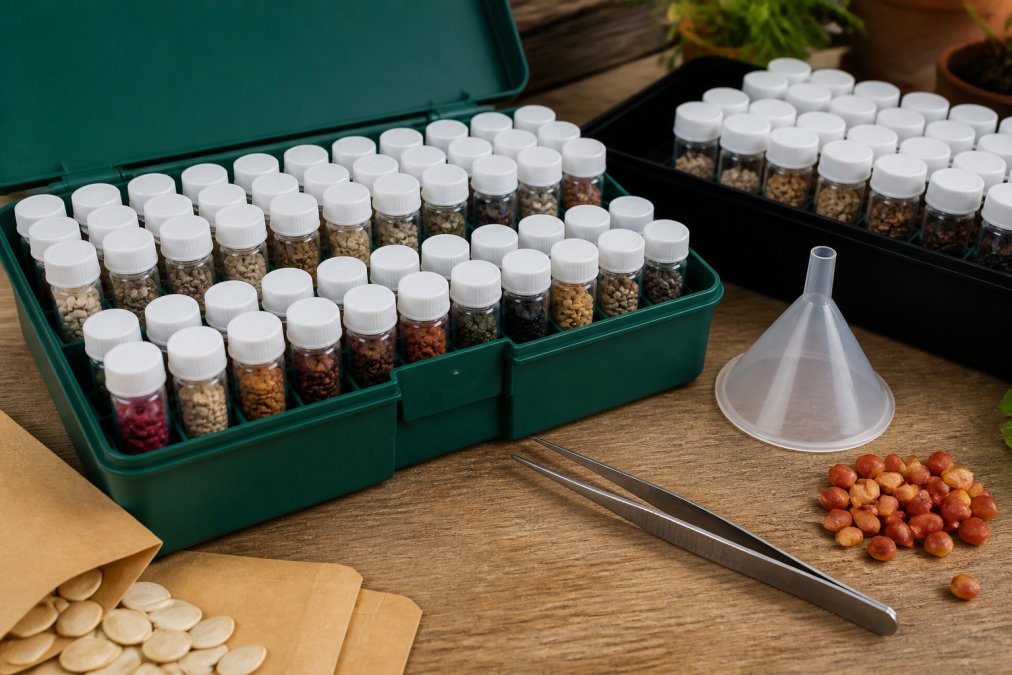
At Moderno Top Shop, we understand that gardeners with 120 varieties need more than just a box. You need a method that's fast to set up, easy to maintain, and reliable year after year. The WALERICA Seed Storage Organizer Kit is designed for exactly this challenge.

Factors That Affect Seed Viability and Storage Life
Seed longevity depends on several key factors. Understanding these helps you store seeds properly and know when to replant.
Temperature plays a critical role. Seeds stay viable longer in cool conditions. Most seeds prefer storage between 32-41°F, though room temperature works for short-term storage.
Humidity is equally important. Seeds need low moisture levels to survive. High humidity accelerates seed deterioration and promotes mold growth. This is why many gardeners use silica gel packets in their storage containers.
Light exposure shortens seed life. Store seeds in dark conditions or opaque containers. Direct sunlight degrades seed viability rapidly.
Seed type matters too. Orthodox seeds (like tomatoes, peppers, and beans) tolerate dry storage well. Recalcitrant seeds (like avocado and cacao) are sensitive to drying and don't store as long.
Air exposure causes oxidation. Sealed containers protect seeds far better than open bags or envelopes.
Different varieties have different lifespans:
- Tomato seeds: 4-6 years
- Lettuce seeds: 4-5 years
- Carrot seeds: 3-4 years
- Onion seeds: 2-3 years
- Pepper seeds: 2-3 years
- Bean seeds: 3-4 years
These timelines assume proper storage conditions. Poor storage cuts these periods in half.
Seed Storage Organization Ideas for Large Collections
To organize seed varieties effectively with 120 varieties, you need a system that scales. Random storage leads to duplicates, lost varieties, and wasted space. The key is building a repeatable workflow that you can complete in a reasonable timeframe and maintain year-round.
The Four-Step Organization Workflow
Step 1: Audit and Categorize (2-3 hours) Before storing, sort all 120 varieties into five primary categories:
- Vegetables (tomatoes, peppers, squash, beans, leafy greens, root crops)
- Herbs (basil, cilantro, dill, parsley, oregano)
- Flowers (marigolds, zinnias, sunflowers, cosmos)
- Heirloom or specialty varieties
- Unknown or unlabeled seeds
This step alone prevents duplicates and reveals what you actually own. Use a large table or workspace. Expect 2-3 hours for 120 varieties if seeds are currently scattered or poorly labeled.
Step 2: Container Selection and Prep (1-2 hours) Choose uniform storage containers. Options include:
- Small glass vials (1-2 oz) with screw caps, ideal for 120 varieties, stackable, moisture-resistant
- Seed envelopes in a filing box, cheaper, but less protection from humidity
- Plastic organizer drawers with compartments, good for visual scanning, but takes more shelf space
The WALERICA Seed Storage Organizer Kit includes 120 individual vials, eliminating the need to source containers separately. If using vials, prepare them by:
- Wiping the interior with a dry cloth
- Adding a small silica gel packet (roughly 1/4 teaspoon) to each vial if your climate is humid (above 50% relative humidity)
- Labeling the vial cap and body with the variety name using a permanent marker
Prep time: approximately 1-2 hours for 120 vials, or 30 minutes if using pre-made envelopes.
Step 3: Populate and Label (2-3 hours) Transfer seeds into prepared containers. For each variety, write on the label:
- Variety name (e.g., "Sungold Cherry Tomato")
- Harvest or purchase date (e.g., "Saved 2025" or "Purchased Sept 2024")
- Expected viability date (e.g., "Plant by 2028")
- Quantity estimate (e.g., "~50 seeds" or "Full packet")
- Source (if saved, note "Home-grown"; if purchased, note supplier)
Use a permanent marker or label maker for durability. Pencil fades within 2-3 years; ballpoint pen smudges when exposed to moisture. This step takes 2-3 hours depending on how many seeds are already labeled versus unlabeled.
Step 4: Arrange and Document (1 hour) Arrange containers in your chosen system:
- Alphabetical by variety name - easiest to scan, good for quick lookups
- By plant type, then alphabetical - groups related seeds, reduces search time during planning
- By expected viability date - forces you to use older seeds first (FIFO method)
- By planting season - spring crops, summer crops, fall crops, winter crops
Pick one method and stick with it. Create a master inventory list (digital or analog) that maps each variety to its storage location. This takes approximately 1 hour for 120 varieties.
Total Time Investment: 6-9 hours
For a single person working steadily, organizing 120 varieties takes one full day (6-8 hours) if starting from scratch, or a half-day (3-4 hours) if seeds are already partially sorted. Breaking the work into two sessions (audit + categorize on day one; container prep and labeling on day two) makes the task feel less overwhelming.
Maintenance: 30 minutes per quarter Once organized, spend 30 minutes every three months to:
- Check for moisture or mold inside containers
- Verify labels are still legible
- Note which varieties you've planted and update quantities
- Rotate stock so older seeds move to the front
Storage Location Matters Store your organized collection in a cool, dark, dry place:
- Ideal: 32-41°F, 30-40% relative humidity, no light exposure (basement, root cellar, refrigerator)
- Acceptable: Cool closet or pantry away from heat sources and direct sunlight
- Avoid: Above the stove, near windows, in humid bathrooms, or uninsulated attics
If storing in a refrigerator, keep seeds in an airtight container or sealed bag to prevent condensation when removing them. Allow seeds to warm to room temperature before opening to avoid moisture damage.
Scaling Beyond 120 Varieties If your collection grows, the same system scales. Add a second organizer or filing box and extend your inventory list. The time per variety decreases as you develop a rhythm, your second 120 varieties will take 4-5 hours instead of 6-9.
How to Label Seed Packets and Track Your Collection
Clear labeling prevents costly mistakes. Plant the wrong variety and you've wasted a season's effort.
Use permanent markers on labels. Pencil fades. Ballpoint pen smudges. Permanent ink stays readable for years.
Write the variety name clearly. Include cultivar details if relevant (e.g., "Cherry Tomato, Sungold").
Understanding the Seed Viability Chart for Your Varieties
A viability chart tells you how long seeds stay plantable under ideal storage conditions. These timelines assume cool, dry, dark storage.
Short-lived seeds (1-2 years): Onion, parsnip, parsley
Medium-lived seeds (3-4 years): Carrot, lettuce, spinach, bean, pea
Long-lived seeds (5+ years): Tomato, pepper, cucumber, squash, melon
Very long-lived seeds (10+ years): Cabbage, kale, broccoli, radish
How to test seeds:
- Place 10 seeds on a damp paper towel
- Roll it up and place in a plastic bag
- Keep at room temperature for 7-14 days
- Count how many germinate
- If 8 out of 10 sprout, viability is 80%
Building Your Inventory System: Digital vs. Analog Methods
Choose a tracking method that fits your style. Digital systems offer searchability. Analog systems work offline.
Digital inventory:
- Spreadsheet (Google Sheets, Excel)
- Dedicated seed app
- Simple database
Drawbacks: requires devices, internet connectivity, learning curve.
Analog inventory:
- Handwritten notebook
- Card catalog system
- Printed spreadsheet in a binder
Benefits: no technology required, tactile, offline access, no distractions.
At minimum, track:
- Variety name
- Quantity on hand
- Purchase or harvest date
- Expected viability date
- Storage location
- Notes (flavor, height, days to maturity)
Implementing First-In, First-Out (FIFO) Protocol for Seeds
FIFO means using older seeds before newer ones. This prevents seeds from aging past viability.
How to implement FIFO:
- Store new seeds in the back of your collection
- Place older seeds in front
- When planting, take from the front first
- Rotate as you add new seeds
Frequently Asked Questions
How long do stored seeds typically remain viable?
Seed longevity varies by type. Orthodox seeds (like lettuce, tomato, and bean) stay viable for 3-5 years in cool, dry conditions. Recalcitrant seeds (such as some tree varieties) have shorter lifespans of 1-2 years. Proper storage in low humidity and consistent temperature extends viability significantly. Using airtight containers with silica gel desiccant helps maintain germination rates well beyond average expectations for most vegetable and flower seeds.
What environmental factors shorten the lifespan of stored seeds?
High humidity and temperature fluctuations are the primary culprits. Relative humidity above 60% accelerates seed deterioration and reduces germination rates. Temperature swings between warm and cold cycles damage seed cells faster than stable, cool storage. Light exposure, especially direct sunlight, also degrades seed viability. Seeds stored in warm, humid environments may lose viability in months rather than years. Consistent conditions between 32-50°F with 20-30% relative humidity preserve seeds longest.
How often should you audit your seed inventory for expiration?
Review your collection annually before each planting season. Check germination rates of older seeds through simple tests: soak a few seeds and track how many sprout within expected timeframes. Remove or compost seeds showing no germination. For hybrid and heirloom varieties, test every 2-3 years to catch declining viability early. Digital inventory systems help flag seeds approaching their expected end-of-life dates, making audits faster and more reliable.
What is the most efficient way to categorize a large seed collection?
Organize by plant type first (vegetables, herbs, flowers), then by variety within each category. Use consistent labeling with crop name, variety, harvest date, and expected viability window. The FIFO (First-In, First-Out) method ensures older seeds get used before newer ones. Assign each variety a unique number or code for quick reference. Store alphabetically or by planting season to match your garden workflow. A dedicated organizer kit with 120 vials and built-in labeling tools streamlines this process significantly.
Organizing 120 seed varieties takes planning, but the payoff is huge. You'll spend less time searching and more time growing. The WALERICA Seed Storage Organizer Kit gives you everything needed to build a system that works. With 120 vials, labels, tweezers, and a funnel included, you can organize your entire collection in minutes. Get your WALERICA Kit and start protecting your seeds today.
