

Best Boxes for Storing Flower Seeds: 2026 Guide
Table of Contents
- Why Flower Seed Storage Matters for Next Season
- Seed Storage Best Practices: Temperature, Moisture, and Light
- How to Organize Flower Seeds by Type and Planting Season
- Maintaining Seed Viability: What Actually Works
- Materials That Protect Seeds: Rigid Containers vs. Bags
- Long-Term Storage vs. Single-Season Planning
- Frequently Asked Questions
Last Updated: September 17, 2026
Why Flower Seed Storage Matters for Next Season
Flower seed storage determines whether the seeds you saved or bought this fall will actually germinate next spring. Get it wrong and you'll replant from scratch; get it right and you'll carry a full collection from one season to the next. This guide from Moderno Top Shop covers how to organize flower seeds, what flower seed storage best practices actually protect viability, and which containers earn their shelf space.

Seed Storage Best Practices: Temperature, Moisture, and Light
The three variables that decide whether seeds stay viable are temperature, relative humidity, and light exposure. Control all three and most flower seeds will hold germination rates for years rather than months.
The Role of Desiccants and Humidity Control
A desiccant absorbs moisture before your seeds do. Silica gel packets, the kind that ship inside shoe boxes and electronics packaging, work well and cost nothing if you save them. Recharge spent packets by drying them in a low oven, then drop one into each container.
Temperature Impact on Seed Longevity
Cool and stable beats cold and fluctuating. A closet shelf that stays near room temperature outperforms a garage that swings from freezing to hot across a season. If you have space, the back of a refrigerator works well for long-term storage, provided the container is fully sealed and away from strong-smelling foods.
How to Organize Flower Seeds by Type and Planting Season
The most reliable way to organize flower seeds is to sort by planting season first, then by type within each season. That order matches how you actually use the collection: you reach for spring bloomers in early spring, not for whatever starts with the letter A.
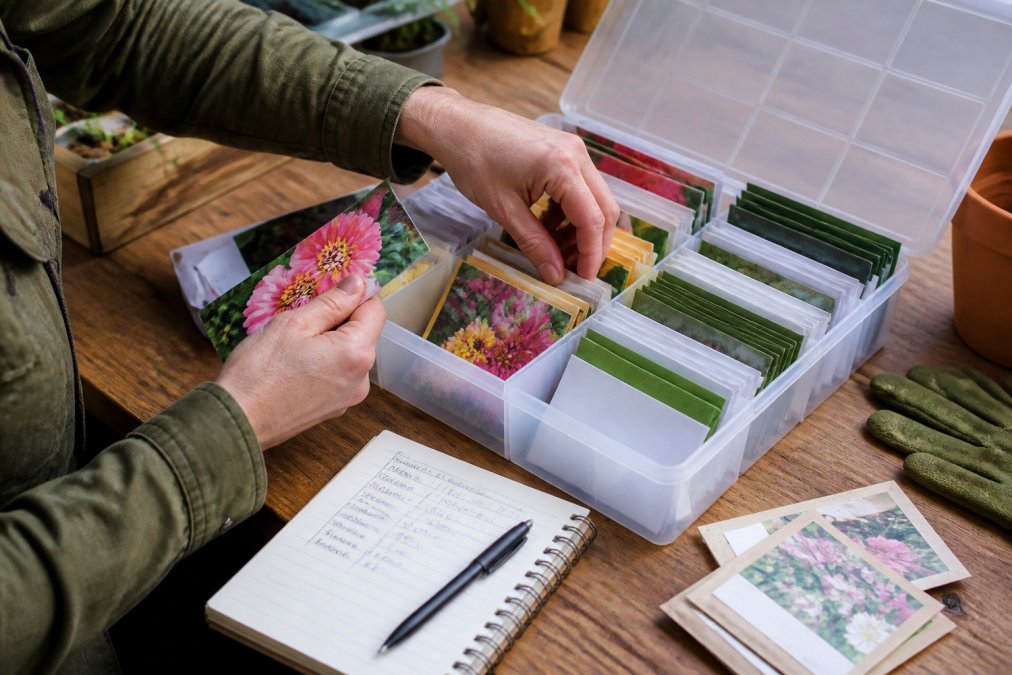
- Separate seeds into spring, summer, and fall planting groups.
- Within each group, split annuals from perennials, then flowers from vegetables and herbs.
- Label every packet with the variety name and the year it was saved or purchased.
- Store each group in its own compartment or envelope so you never dig through the whole collection.
- Add a master index card listing what's in each compartment.
Alphabetical vs. Seasonal Classification Systems
Alphabetical classification works when you have a large collection and you know exactly what you're looking for. Seasonal classification works when you're planning a planting calendar and need everything for one window at once.
Maintaining Seed Viability: What Actually Works
Maintaining seed viability comes down to four habits: keep the container sealed, keep the temperature stable, rotate older stock to the front, and, the step most guides skip, sort your collection by how long each species actually lasts. Everything else is detail.
Sort by Longevity, Not Just by Type
Not all flower seeds age at the same rate. Not all flower seeds age at the same rate. Group your packets into three longevity tiers and label the tier on each envelope:
- Long-lived (roughly 4-6+ years in cool, dry storage): hard-coated flowers such as morning glory, nasturtium, sweet pea, and most beans and peas grown for their flowers. These tolerate a bit more temperature swing.
- Medium-lived (roughly 2-3 years): marigold, zinnia, cosmos, calendula, and most common annuals sold in garden-center racks. This is where the bulk of a typical collection sits.
- Short-lived (roughly 1 year or less): delphinium, larkspur, pansy, viola, and any seed with a thin or oily coat. Plant these the season after you buy or save them, or accept a steep drop in germination.
The Germination Test That Tells You What to Keep
A germination test costs you ten seeds and about a week. Fold ten seeds into a damp, not wet, paper towel, seal it in a zipper bag, and keep it at room temperature. Check daily. Count how many sprout within the species' typical window (often 7-14 days for common annuals).
- 8-10 sprouted: plant as normal.
- 5-7 sprouted: sow thicker than usual to compensate.
- Fewer than 5: compost the batch or use it for a low-stakes bed.
Habits That Make the Difference
- Check stored seeds once a season for moisture, mold, or pest activity.
- Keep a simple inventory card so you know what you have and when you got it.
- Never store seeds in paper alone in a humid room; paper breathes both ways.
- Recharge desiccant packets once a year, or whenever the indicator beads change color.
Why This Beats a Flat 'Check Every Year' Rule
A flat rule treats a nasturtium seed and a delphinium seed the same, but their storage lives differ by years. Sorting by longevity means you spend your germination tests where they matter, plant your fragile seeds before they fade, and stop throwing away perfectly good hard-coated seed just because it's three years old.
Walerica Seed Organizer Kit – 120 Slots →
Materials That Protect Seeds: Rigid Containers vs. Bags
Rigid containers protect seeds better than bags in almost every home storage scenario. A contenedor rígido holds its shape, resists crushing, and seals against humidity more reliably than a soft bag that creases and leaks.
| Storage Option | Best For | Protection Level | Reusable |
|---|---|---|---|
| Rigid compartmented box | Full collections, 50+ varieties | High | Yes |
| Resealable envelopes | Small batches, short term | Moderate | Limited |
| Zipper bags | Bulk seed, single season | Low | Sometimes |
| Glass jars | Long-term, sealed storage | High | Yes |
| Paper packets alone | Immediate use only | Very low | No |
DIY Options vs. Purpose-Built Organizers
DIY organizers work, and plenty of gardeners build excellent systems from pill boxes, craft storage cases, or repurposed tackle boxes. The trade-off is labeling and sealing: homemade setups often leak humidity and lose their labels over time.
Long-Term Storage vs. Single-Season Planning
Long-term storage and single-season planning need different setups, and mixing them is where most collections go wrong. Long-term storage prioritizes stability: sealed containers, desiccant, cool and dark conditions, and minimal handling. Single-season planning prioritizes access: everything you'll plant this year in one place, easy to reach and easy to rotate.
Build a Three-Tier System
- Long-term bank: sealed rigid container, desiccant, cool dark shelf, checked once a year. Reserve this for seed you're saving for future seasons or holding for heirloom preservation.
- Working set: a smaller organizer holding only this season's packets, kept where you plan and plant. This is the box you open weekly.
- Rotation queue: older seeds moved to the front of the working set so they get used first. Anything past its longevity tier's window goes straight into a germination test before it earns garden space.
Attach a Planting Calendar to the Box
A storage box without dates is just an archive. Here's how to make it a plan:
- Write the target sowing window on every label. For most flowers, that means the indoor start date (often 6-8 weeks before your last expected frost) and the direct-sow date. Your local cooperative extension office publishes frost dates by ZIP code, use those, not a national average.
- Add a master index card to the lid. List each compartment, the varieties inside, and their target sow dates. One glance tells you what to pull this month.
- Use a rotation column. Note the year each packet entered the box. When you refile a new packet, move the old one to the front of its compartment.
- Mark succession-sown varieties. Flowers like cosmos, zinnia, and calendula benefit from repeat sowings every 2-3 weeks through the season. Flag those packets so you don't forget the second and third rounds.
Where to Put the Box
Location matters as much as the container. Avoid kitchens, laundry rooms, and any shelf near a water heater, furnace, or oven, those spaces swing in temperature and humidity daily. A closet shelf in an interior room, a basement shelf away from the floor, or the back of a refrigerator (for the long-term bank only, fully sealed) all work well. Keep the box off concrete floors, which wick moisture, and out of direct sun.
When to Move Seed Between Tiers
- Fall: after harvest or purchase, sort new seed into longevity tiers and file into the long-term bank.
- Late winter: pull this season's packets into the working set and run germination tests on anything short-lived or older than two years.
- Spring: sow from the working set; refile leftovers with an updated year note.
- Summer: handle succession sowings from the working set without disturbing the bank.
- End of season: anything unplanted and past its tier window goes to the rotation queue for a test next winter.
The best flower seed storage system is the one you'll actually maintain. A simple seasonal sort, a sealed container with one desiccant packet, and a sowing date written on every label beats an elaborate setup you never open.
Frequently Asked Questions
What are the best containers for long-term flower seed storage?
Rigid, airtight containers work best for long-term flower seed storage. Look for options made from materials that block light and resist moisture, like the compartments found in purpose-built seed organizers. Glass jars with sealed lids also work well, but they are heavier and breakable. The key is keeping seeds dry and dark. A container with individual compartments, like a 120-slot seed storage case, lets you separate varieties while keeping everything in one place. Avoid cardboard boxes or paper bags for storage longer than a few months, since they absorb moisture and do not seal properly.
How do you keep flower seeds organized and dry?
Start by labeling every packet or envelope with the variety name and the year you saved or bought it. Group seeds by type, such as annuals, perennials, or vegetables, and store them in a compartmentalized box or a binder with clear pockets. For dryness, add a small desiccant packet to each section or to the main container. Keep the box in a cool, dark spot away from humidity sources like basements or kitchens. A relative humidity below 50% is ideal. Checking your inventory at the start of each planting season helps you rotate older seeds before they lose viability.
Should I use plastic or glass containers for seed storage?
Both plastic and glass can work for seed storage, but each has trade-offs. Plastic containers are lightweight, less likely to break, and often come with built-in compartments or adjustable dividers. Glass jars seal tightly and do not absorb odors, but they are heavier and can crack if dropped. For everyday home gardening, a sturdy plastic organizer with individual vials or compartments offers the best balance of protection and convenience. Whichever material you pick, make sure it seals well and blocks light. Seeds stored in clear containers should be kept in a dark cabinet or drawer.
How many seed varieties can a professional organizer hold?
The capacity depends on the organizer you choose. Some models hold as few as 20 to 30 varieties, while larger kits can accommodate 120 or more individual slots. The WALERICA Seed Storage Organizer Kit from Moderno Top Shop holds up to 120 vials, which suits gardeners managing a large collection of flower, herb, and vegetable seeds. If you have fewer varieties, a smaller container with removable dividers gives you room to grow your collection without wasting space. Match the capacity to your current inventory plus a little extra room for new additions each season.
