
Best Methods to Preserve Garden Seeds
Table of Contents
- Why Proper Seed Preservation Matters
- Harvesting Seeds at Peak Ripeness
- Drying Seeds Before Storage
- Best Seed Storage Containers 2026
- Optimal Temperature for Seed Storage
- Seed Viability Testing Methods
- Labeling and Organizing Your Seed Collection
- Frequently Asked Questions
Last Updated: September 28, 2026
Why Proper Seed Preservation Matters
Saving seeds from your garden is rewarding, but to preserve garden seeds and keep them viable requires more than tossing them in a drawer. Proper seed preservation protects your investment, ensures high germination rates, and lets you preserve heirloom varieties and genetic diversity.
Seeds stored carelessly lose viability within weeks; stored correctly, they remain viable for years. Success depends on moisture control, temperature stability, darkness, and organization. Proper seed preservation protects your investment, ensures high germination rates, and lets you preserve heirloom varieties and genetic diversity.
Harvesting Seeds at Peak Ripeness
Successful seed preservation starts in the garden. Timing your harvest correctly ensures seeds are mature enough to germinate reliably; immature seeds won't develop properly, while overripe seeds decline in viability.
Most seeds reach peak maturity when the seed pod or flower head begins to dry on the plant. For tomatoes and peppers, wait until fully ripe. For beans and peas, allow pods to dry and brown on the vine. For flowers and herbs, harvest when seed heads turn brown and papery but before they shatter.
Mature seeds are firm, fully colored, and have a hard outer coat. A common mistake is harvesting too early; if uncertain, wait another week. Late harvesting is less risky than early harvesting.
Cut seed heads into a clean container on a dry day. Avoid harvesting after rain, as excess moisture promotes mold. Keep seeds from different plants separated until fully processed and dried.
Drying Seeds Before Storage
Drying is where many gardeners struggle. Seeds must reach 5-10% moisture content to prevent fungal growth and rot while maintaining viability, difficult to measure without equipment, but achievable with proper technique.
Seeds are hygroscopic and absorb moisture from their environment. Above 12-14% moisture, fungi activate and decay seeds. Below 5%, seeds become brittle and lose viability. The 5-10% range is the "sweet spot" where seeds remain dormant and stable, the standard commercial seed companies use.
Two-Stage Drying Process
Initial drying removes bulk moisture. Spread seeds on a clean, dry surface in a well-ventilated area away from direct sunlight. Stir gently every few days to prevent mold. In most climates, seeds dry in 2-4 weeks at 50-70°F; avoid temperatures above 80°F.
Seeds are dry when they snap rather than bend under gentle pressure. If still flexible, they need more drying time.
Equilibrium drying removes final moisture traces using desiccants, critical for long-term storage, especially in humid climates.
Natural and Commercial Desiccants
Silica gel packets are most effective. Place dried seeds in an airtight container with silica gel for 1-2 weeks. Recharge saturated silica in a 250°F oven for 2-3 hours.
Natural alternatives include uncooked rice (4:1 seed-to-rice ratio, absorbs moisture in 1-2 weeks), powdered milk (antimicrobial, replace every few days), non-iodized salt (place seeds in cloth bag above salt to avoid direct contact), or wood ash (1:4 ratio, has antifungal properties; rinse before planting).
The "snap test" verifies dryness without equipment: bend a seed gently. A properly dried seed snaps cleanly; one that bends still contains too much moisture.
Never use heat to speed drying, ovens, dehydrators, and heat lamps damage seed viability. Avoid direct sunlight, which degrades seed oils. Air-dry at room temperature in darkness or indirect light.
Once seeds reach the 5-10% moisture range and are sealed in airtight containers with desiccants, they're ready for long-term storage. The drying phase is complete, and the preservation phase begins.
Best Seed Storage Containers 2026
The container you choose determines how well your seeds stay protected from moisture, light, and temperature fluctuations. Different storage methods suit different gardening situations, but all share one goal: creating a stable microclimate around your seeds.
Glass jars with tight-sealing lids offer visibility but transmit light, so store in darkness or wrap in opaque material.
Airtight plastic food containers work if seals are truly airtight. Avoid regular bags or envelopes; kraft paper is only temporary during drying.
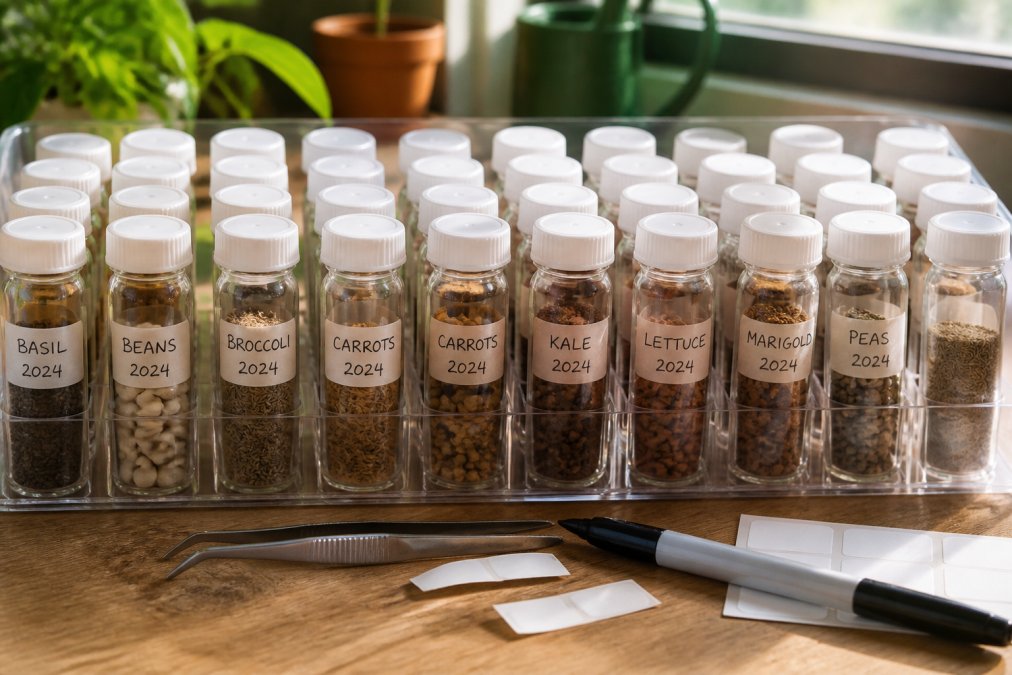
For serious seed collectors, the WALERICA Seed Storage Organizer Kit holds up to 120 varieties in a portable box. The kit includes labels, clips, tweezers, bottles, funnel, and useful gardening accessories.
WALERICA Seed Storage Organizer Kit →

This system removes organizational burden: seeds stay in labeled vials, visible at a glance, with setup taking minutes.
Optimal Temperature for Seed Storage
Temperature stability is critical in seed preservation. Heat accelerates aging; cold slows it. The ideal storage temperature is 32-41°F, roughly refrigerator temperature.
At room temperature (70°F), seeds lose viability much faster. Every 10°F increase cuts viability in half. Cool storage extends life from months to years.
If refrigerator storage isn't practical, choose the coolest, most stable location: a basement corner, unheated closet, or garage. Avoid attics (seasonal fluctuations) and kitchens/bathrooms (temperature and humidity spikes).
Freezer storage works for long-term preservation of seeds you won't use for years. Freeze only completely dry seeds in airtight containers. Limit freezer access to once or twice yearly to avoid freeze-thaw damage. Seeds at 0°F remain viable 10+ years, ideal for heirlooms.
Avoid storing seeds in unheated spaces that experience freezing temperatures. Repeated freeze-thaw cycles damage seed structure and reduce germination rates. If your storage area freezes occasionally, move seeds to a warmer location during winter months.
How Long Do Seeds Actually Last? Species-Specific Longevity
Seed viability varies dramatically by species. Knowing how long your seeds will remain viable helps you decide whether to replant from storage or purchase fresh seed. The following table shows typical seed longevity under ideal storage conditions (32-41°F, 5-10% moisture, darkness, airtight containers):
| Seed Type | Typical Viability | Notes |
|---|---|---|
| Tomato | 4-6 years | Highly durable; often viable at 8+ years if stored cold |
| Pepper | 2-4 years | More sensitive than tomato; viability drops after year 3 |
| Lettuce | 3-5 years | Germinates reliably through year 4; test before year 5 |
| Carrot | 3-4 years | Short-lived; viability declines noticeably after year 3 |
| Beans | 3-4 years | Durable but susceptible to weevil damage in warm storage |
| Peas | 3-4 years | Similar to beans; store in cool conditions to prevent insect damage |
| Squash/Pumpkin | 4-6 years | Long-lived; often viable at 8+ years |
| Cucumber | 5-10 years | Exceptionally durable; among the longest-lived garden seeds |
| Onion | 1-2 years | Very short-lived; nearly always purchase fresh seed |
| Parsnip | 1-2 years | Extremely short-lived; viability drops sharply after 1 year |
| Spinach | 3-5 years | Reliable through year 4; test in year 5 |
| Basil | 4-5 years | Moderately durable; viability declines after year 4 |
| Cilantro | 3-5 years | Reliable; test viability after year 4 |
| Flower seeds (most) | 2-5 years | Varies widely; zinnias and marigolds are durable; petunias are short-lived |
Why Longevity Varies
Seed longevity depends on seed structure and oil content. Seeds with thick, hard coats (beans, squash, cucumber) last longer because the coat protects the embryo. Seeds with thin coats or high oil content (onion, parsnip, carrot) deteriorate faster because oils oxidize over time, even in cold storage. This is why onion and parsnip seeds should always be purchased fresh, homegrown storage is unreliable.
Using Longevity Data to Manage Your Collection
Track the harvest or purchase date on every seed container. When planting season arrives, consult this table to decide which seeds to plant and which to test before committing garden space. Seeds in their first or second year of storage are almost always viable. Seeds in year 3-4 should be tested (see the Seed Viability Testing Methods section). Seeds beyond the typical longevity window should be tested or replaced with fresh seed, especially for expensive or critical crops.
If you're saving seeds from short-lived species like onion or parsnip, prioritize replanting them every year rather than storing them. If you're saving tomato or cucumber seeds, you can confidently store them for 5+ years and still expect strong germination rates. This knowledge transforms seed saving from guesswork into a predictable, manageable system.
Seed Viability Testing Methods
Before planting a stored seed collection, test viability to know what will actually germinate. Several simple methods reveal whether seeds are still alive and capable of sprouting.
The float test is the quickest initial check. Drop seeds into a glass of water. Seeds that float are often hollow or damaged. Seeds that sink are more likely to be viable. This isn't a definitive test, some viable seeds float, but it eliminates obviously bad seeds quickly.
The germination test is more accurate. Place seeds on a damp paper towel, roll it loosely, place it in a plastic bag, and keep it warm and moist for 7-14 days (depending on seed type). Count how many seeds sprout. If 80% germinate, viability is excellent. If only 50% germinate, you know to plant more densely to compensate. If fewer than 20% germinate, it's time to replace that seed lot.
The cut test works for large seeds like beans.
Labeling and Organizing Your Seed Collection
Organization separates casual seed savers from serious gardeners. Without clear labeling, you'll plant mystery seeds, forget which varieties you have, and waste storage space on duplicates.
Frequently Asked Questions
What is the best way to preserve garden seeds for long-term viability?
Preserve garden seeds by harvesting at full maturity, drying completely until moisture content drops to 5-10%, storing in airtight containers with desiccants, and maintaining cool, dark conditions between 32-41°F. Clean seeds before storage to remove debris and fungal material. Proper labeling with harvest date ensures you track viability.
How long do garden seeds typically remain viable in storage?
Viability varies by species. Tomato, pepper, and lettuce seeds last 4-6 years. Bean and pea seeds remain viable 3-4 years. Carrot, onion, and parsnip seeds drop to 2-3 years. Proper storage conditions, cool temperature, low humidity, and darkness, extend these timelines significantly. Seeds stored at optimal conditions outlast those kept in warm, humid environments by years. Test viability annually using germination tests to confirm planting success before the season begins.
How can I tell if my stored seeds are still good for planting?
Conduct a float test by placing seeds in water; viable seeds sink while non-viable seeds float. For more accuracy, use a germination test: place 10 seeds on damp paper towels, roll them, seal in a plastic bag, and keep at room temperature for 7-10 days. Count sprouted seeds to calculate germination percentage. Seeds showing 70% or higher germination are suitable for planting. Visual inspection for mold, discoloration, or insect damage also indicates storage success or failure.
What containers are best for organizing a large seed collection?
Best seed storage containers 2026 include airtight glass jars with rubber seals, waterproof plastic organizer boxes with individual vials, and food-grade metal tins. Choose containers that seal completely to prevent moisture infiltration. The WALERICA Seed Storage Organizer holds up to 120 varieties in individual vials with built-in labeling, ideal for gardeners managing diverse collections. Avoid paper envelopes in humid climates; they absorb moisture and compromise seed longevity.
