
Urban Garden Cost Breakdown: Start From Zero
Table of Contents
- What Does It Really Cost to Start an Urban Garden
- Initial Investment: Essential Gardening Tools for Beginners
- Breaking Down the Cost of Raised Garden Beds and Containers
- Substrate, Fertilizer, and Soil Amendments: What to Budget
- Seeds, Seedlings, and Starter Plants: Pricing Your First Crops
- How to Save Money on Gardening Supplies Without Sacrificing Quality
- Monthly Maintenance Costs and Long-Term Savings
- Conclusion: Is Your Urban Garden Worth the Investment
- Frequently Asked Questions
Last Updated: September 26, 2026
What Does It Really Cost to Start an Urban Garden
The most common mistake when budgeting for an urban garden is underestimating what the urban garden cost actually is. Many people assume they can grab a few pots and seeds and get growing. The reality is different. A proper setup requires planning and real investment upfront.
Understanding the true urban garden cost means distinguishing essentials from nice-to-haves. Smart planning starts with knowing your budget.
The key is buying smart and prioritizing essentials.
This guide breaks down exactly where your money goes. We'll show you the real costs of each component so you can make informed decisions about where to invest and where to cut corners without sacrificing results.
Initial Investment: Essential Gardening Tools for Beginners
Here's what matters most:
- Hand trowel, Move soil and dig small holes. Essential for container work.
- Pruners, Cut stems and harvest vegetables cleanly. Prevents damage to plants.
- Garden gloves, Protect your hands from soil and thorns. Makes work more comfortable.
- Watering can or spray bottle, Control water delivery in small spaces. Precision matters in containers.
- Weeding fork, Remove weeds from tight spaces. Saves time and effort.
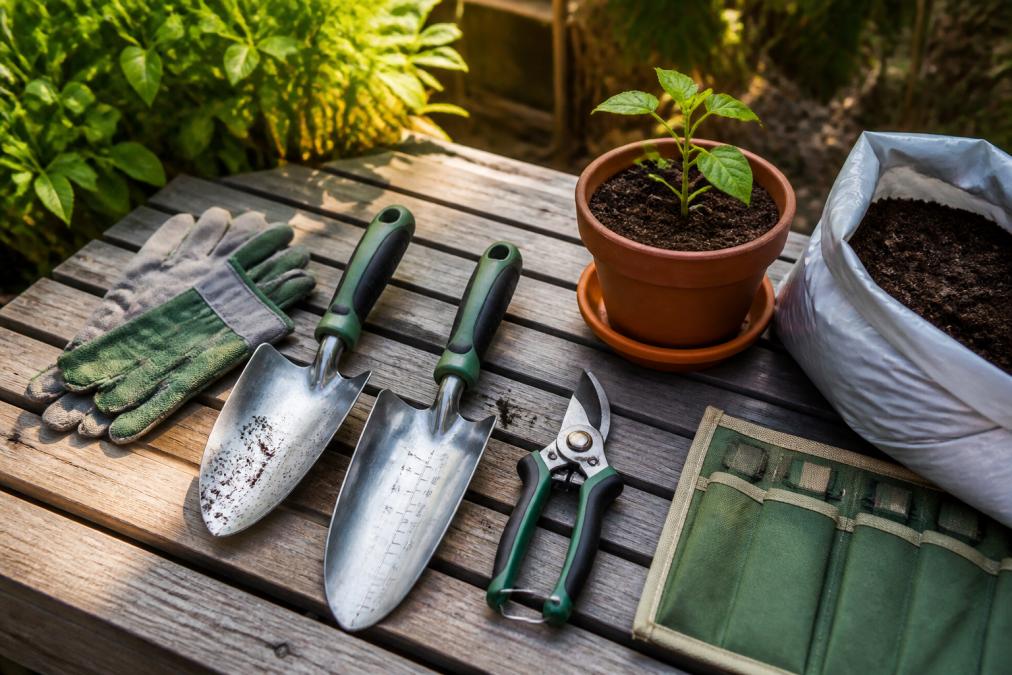
A starter toolkit runs from moderate to mid-level investment. Buy one quality pair of pruners rather than multiple cheap ones, they jam and rust quickly. Skip fancy ergonomic handles for now.
Breaking Down the Cost of Raised Garden Beds and Containers
Container gardening works best for urban spaces. Small, medium, and large containers are available. For 6-10 containers, plan for a moderate investment.
Raised beds require a moderate investment for the bed and soil. Start with containers instead, they're flexible, moveable, and let you experiment without massive upfront costs.
Substrate, Fertilizer, and Soil Amendments: What to Budget
Soil quality determines success more than any single factor. Cheap soil compacts easily and drains poorly; good soil costs more but prevents costly failures.
Never use outdoor garden soil in containers, it compacts and suffocates roots. Container soil must be lightweight, drain quickly, and maintain structure after repeated watering.
Quality potting mix contains base material (peat, coir, or bark), drainage material (perlite or vermiculite), and nutrients (compost or fertilizer). Read labels, cheap mixes are often 80% peat with minimal drainage and fail within a season.
Potting Mix Options and Real Costs
- Standard potting mix ($15-$25/bag): Peat, perlite, compost. Fills 4-6 containers. Lasts one season.
- Premium potting mix ($25-$40/bag): Aged bark, more perlite, mycorrhizae. Lasts 1.5 seasons if amended.
- Coconut coir-based mix ($18-$32/bag): Peat-free, sustainable alternative. Performs identically.
- Seed-starting mix ($12-$20/bag): For germination only; transplant seedlings into potting mix.
For 6-10 containers, plan for a moderate investment on potting mix. Buy 2-3 bags of standard or premium mix.
Organic Fertilizers and Soil Amendments: The Breakdown
Container plants exhaust nutrients faster than ground soil. You must replenish them monthly during the growing season. Here are the most effective options:
Compost ($15-$30/bag): Improves soil structure and adds slow-release nitrogen. Mix 20-30% into potting mix at planting; top-dress monthly. Cost: $3-$6 initial, $2-$4 monthly.
Worm castings ($20-$40/bag): Highest nutrient density. Mix 10-20% at planting; side-dress every 3-4 weeks. Cost: $4-$8 initial, $2-$4 monthly. Best for tomatoes, peppers, and herbs.
Coconut coir ($10-$20/brick): Sustainable peat alternative with excellent water retention.
Seeds, Seedlings, and Starter Plants: Pricing Your First Crops
Seeds and seedlings are available. For beginners, buy 3-5 seedlings of proven producers (tomatoes, peppers, basil) and seeds for fast growers (lettuce, radishes, spinach). Plan for a moderate budget. Buy seedlings in spring when selection is best.
How to Save Money on Gardening Supplies Without Sacrificing Quality
Buy amendments in bulk with neighbors (save 15-25%). Shop end-of-season sales (July-August). Reuse plastic containers, wooden crates, and old buckets. Make your own compost. Buy quality basics (pruners, soil, seeds); save on containers. Join local gardening groups for seed exchanges and advice.
Monthly Maintenance Costs and Long-Term Savings
Ongoing Monthly Expenses (Growing Season): Water $5-$15, fertilizer/amendments $8-$20, replacement seedlings/seeds $5-$15, pest management $5-$12 (neem oil $10-$15, insecticidal soap $8-$12), pruning supplies $2-$8 (twine $4-$6/season).
Calculating Real Return on Investment
- Tomatoes: 1 plant yields 20 to 30 pounds per season. Retail price: $2 to $4 per pound = $40 to $120 per plant. With 2 to 3 tomato plants, expect $80 to $360 in tomato value.
- Peppers: 1 plant yields 15 to 25 peppers per season. Retail price: $1.50 to $3 per pepper = $22.50 to $75 per plant. With 2 plants, expect $45 to $150 in pepper value.
- Herbs (basil, cilantro, parsley): 1 plant replaces $3 to $5 in weekly grocery purchases. A single basil plant produces continuously for 4 to 5 months. Replacement value: $60 to $100 per plant. With 3 herb plants, expect $180 to $300.
- Leafy greens (lettuce, spinach, kale): Succession planting yields 2 to 3 harvests per season. Each harvest from 4 to 6 plants produces $15 to $25 in retail value. Three cycles = $45 to $75 total.
- Other crops (zucchini, beans, radishes): Variable but typically $20 to $50 per plant depending on variety.
Conservative first-year produce value: a moderate to significant amount.
-
Quality premium: Homegrown tomatoes taste 3 to 5 times better than supermarket varieties. Organic herbs are 40% to 60% fresher. This quality difference justifies a 30% to 50% premium over retail prices. Adjusted value: $325 to $900.
-
Organic certification value: Certified organic produce costs 20% to 40% more than conventional. Your garden is inherently organic (unless you use synthetic pesticides). Adjusted value: $390 to $1,080.
-
Year-two economics: Your initial tool and container investment ($100 to $240) doesn't repeat. Year-two costs are purely recurring ($245 to $585) with the same or higher produce yield. Year-two ROI is positive by $0 to $495 minimum, and often $200 to $500 profit.
-
Cumulative five-year value: Initial investment amortized over 5 years = $97 to $229 per year. Recurring costs average $245 to $585 annually. Total annual cost: $342 to $814. Average annual produce value (conservative): $400 to $700. Over 5 years, breakeven occurs in year one; years 2 through 5 generate $1,200 to $2,800 in net savings.
The Hidden Benefit: Waste Reduction
Practical Cost-Control Strategies
- Succession plant (sow new seeds every 2 weeks) to spread costs and extend harvest, rather than buying all seedlings at once.
- Compost your own amendments to eliminate the $8 to $20 monthly fertilizer cost after year one. A small countertop composter ($30 to $50) pays for itself in 3 to 4 months.
- Share water and fertilizer costs with neighbors running adjacent balcony gardens. Bulk purchasing reduces per-unit costs by 15% to 25%.
- Grow high-value crops first: Herbs, cherry tomatoes, and peppers deliver the fastest ROI. Leafy greens are lower-value but fast-growing. Save space-hungry, low-value crops (like full-size watermelons) for year two once you've mastered basics.
Conclusion: Is Your Urban Garden Worth the Investment
| Component | Budget Range | Notes |
|---|---|---|
| Hand tools | $40-$80 | Trowel, pruners, gloves, watering can |
| Containers | $60-$200 | 6-10 pots or fabric grow bags |
| Soil & amendments | $80-$160 | Quality potting mix, compost, fertilizer |
| Seeds & seedlings | $40-$80 | Mix of both for faster results |
| Miscellaneous | $20-$40 | Netting, stakes, pest management |
| Total First Season | $240-$560 | Typical range for home gardener |
According to the USDA's guidance on home food production, home gardens provide significant nutritional and economic benefits to households. Planning your budget carefully ensures you maximize both.
Frequently Asked Questions
What is the average cost to start a small urban garden at home?
A basic urban garden setup typically ranges from moderate to mid-level investment depending on your space and goals. Your initial costs depend on whether you choose containers, raised beds, or in-ground planting, plus soil, seeds, and tools. Most beginners spend a moderate amount for a starter setup with essential supplies. The actual total depends on your location, the size of your garden, and the quality of materials you select.
Is it cheaper to grow your own vegetables than to buy them from the store?
Yes, over time. After your initial investment in an urban garden, homegrown vegetables cost significantly less per harvest than store-bought produce. Most gardeners see cost recovery within the first season, especially if they grow high-yield crops like tomatoes, lettuce, and herbs. The savings multiply in year two and beyond since you won't need to replace major infrastructure. Plus, homegrown vegetables are fresher and often more nutritious than store alternatives.
What are the recurring monthly costs of maintaining an urban garden?
Monthly maintenance costs are minimal after your initial setup. Budget for water, occasional fertilizer or compost replenishment, and replacement seeds or seedlings, which is typically a minimal to moderate amount per month depending on garden size and crop rotation. Most ongoing expenses are optional upgrades like premium organic amendments or new tool replacements. Many gardeners offset these costs by composting kitchen waste and saving seeds from successful harvests.
Do I need expensive equipment to start a home garden if I have only 30 varieties of seeds?
No. You can start successfully with basic hand tools and containers you may already own. A small urban garden doesn't require heavy machinery or high-end equipment. Focus on affordable essentials: quality soil, proper drainage containers, and basic hand tools like a trowel and pruners. Seed storage solutions like the WALERICA organizer help protect your collection without adding complexity, allowing you to scale your garden at your own pace as your skills and interest grow.
