

Greenhouse Management: A 2026 Complete Guide
Table of Contents
- What Greenhouse Management Actually Covers
- Greenhouse Climate Control Systems That Protect Your Crops
- Daily Operations: Irrigation, Fertilization, and Crop Health
- Best Practices for Greenhouse Organization and Layout
- Seed Storage and Inventory Management for Greenhouse Success
- Greenhouse Automation, IoT, and Sustainable Practices
- Career Paths and Economic Viability in Greenhouse Management
- Frequently Asked Questions
Last Updated: August 31, 2026
Greenhouse management is the practice of controlling the physical environment, biological systems, and daily operations inside a protected growing structure to maximize crop health and yield. This guide covers every major discipline that makes greenhouse management work, from climate control and pest scouting to automation, inventory, and the economics of running a profitable operation.
The honest answer most guides skip? Greenhouse management fails not because growers lack knowledge, but because they lack systems. A greenhouse without documented processes for irrigation schedules, pest monitoring, and seed inventory is just an expensive shed.
What Greenhouse Management Actually Covers
Greenhouse management spans plant physiology, environmental engineering, agronomy, and business operations. A well-run greenhouse coordinates at least six distinct operational areas simultaneously: climate regulation, irrigation and nutrient management, integrated pest management, propagation and cultivation, infrastructure maintenance, and inventory control.
Most beginners focus entirely on plant care and ignore the operational layer. A crop that receives perfect irrigation but inconsistent temperature control will underperform. The systems have to work together.
Here's the scope of what greenhouse management covers:
- Environmental control: temperature, humidity, CO2 levels, ventilation, and photoperiod
- Crop production: propagation, transplanting, cultivation schedules, and harvesting techniques
- Pest and disease management: scouting, biosecurity protocols, and integrated pest management
- Nutrient management: fertilization schedules, soil or growth media selection, and water quality
- Infrastructure: greenhouse design, benching systems, irrigation systems, and technology integration
- Business operations: nursery management, wholesale distribution, inventory tracking, and profitability analysis
Greenhouse Climate Control Systems That Protect Your Crops
Climate regulation is the single highest-use activity in greenhouse management. Get it right and most other problems become manageable.
Temperature, Humidity, and Ventilation Basics
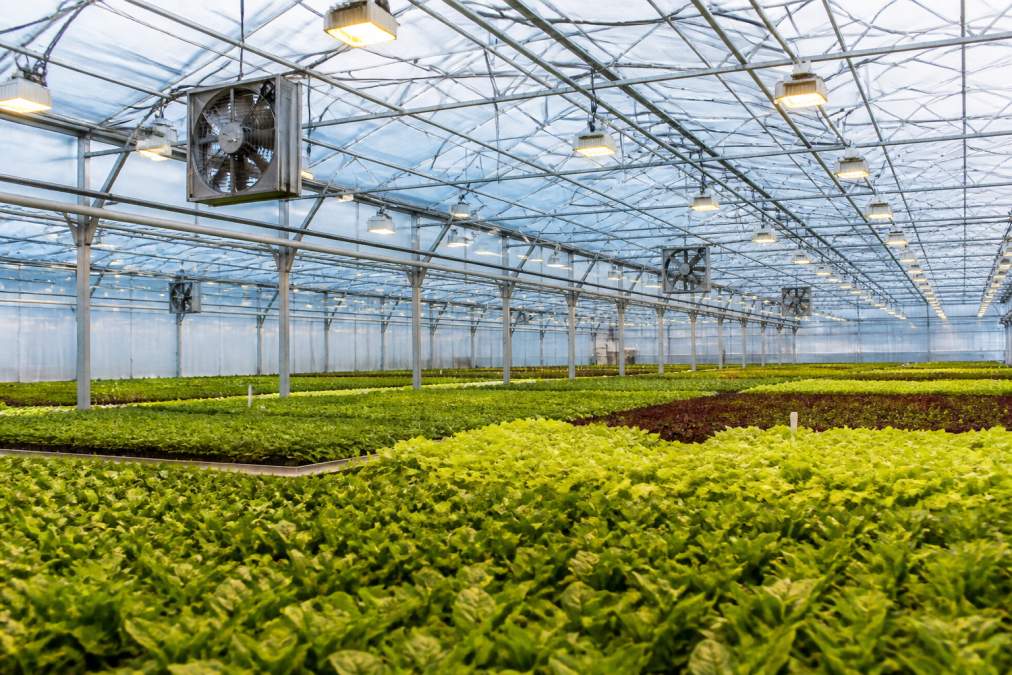
Temperature and humidity are interdependent variables. Raising temperature without adjusting ventilation increases relative humidity, creating ideal conditions for fungal pathogens. Most greenhouse crops perform best with cooler nights, a practice known as DIF management, which promotes compact, marketable plants.
Effective ventilation serves three functions: temperature reduction, humidity removal, and CO2 replenishment. Passive ventilation through ridge vents works in mild climates. In hot or humid regions, forced-air systems with horizontal airflow fans are standard. According to University of Minnesota Extension greenhouse management resources, proper air circulation reduces foliar disease by disrupting the still, moist boundary layer that pathogens require.
A practical ventilation checklist:
- Ridge vent area should equal roughly 15-20% of floor area for passive systems
- Horizontal airflow fans should move air at one air exchange per minute
- Thermostat staging should activate fans in sequence to prevent temperature swings
- Evaporative cooling pads are effective when outside relative humidity is below 70%
Photoperiod Control and Lighting
Photoperiod control is where many small operations leave significant yield on the table. Many crops are photoperiodic, meaning flower initiation is triggered by day length. Chrysanthemums, poinsettias, and bedding plant varieties require precise light interruption or extension to hit commercial production windows.
LED grow lights have become increasingly viable, with significantly lower heat output and energy consumption. The USDA Agricultural Research Service plant lighting guidelines provides validated light intensity recommendations by crop category.
For most vegetable and ornamental crops, a daily light integral of 10-17 mol/m²/day is the target range. Growers below this threshold should consider supplemental lighting before adjusting any other input.
Daily Operations: Irrigation, Fertilization, and Crop Health
The biggest mistake in daily greenhouse operations is treating irrigation and fertilization as separate decisions. Every time water moves through a substrate, it carries nutrients with it or leaches them away.
Irrigation Systems and Nutrient Management
Drip irrigation is the dominant delivery method in commercial greenhouse production because it applies water and fertilizer directly to the root zone, minimizes foliar wetness, and allows precise volume control.
Soilless substrates have minimal nutrient buffering capacity, so growers must supply a complete nutrient solution with every irrigation, including macronutrients, secondary nutrients, and micronutrients at appropriate ratios.
Key nutrient management principles:
- Maintain electrical conductivity of the nutrient solution within crop-specific target ranges
- Monitor pH between 5.8 and 6.5 for most crops to ensure micronutrient availability
- Flush substrates periodically to prevent salt accumulation
- Track leachate EC and pH to detect root zone imbalances early
Integrated Pest Management and Biosecurity
Integrated pest management combines biological, cultural, mechanical, and chemical methods, with chemical intervention as the last resort. A sound IPM program begins with pest scouting: systematic, scheduled inspection of plants for early signs of infestation or disease.
Biosecurity is the part most growers underestimate. Introducing new plant material without a quarantine period is the most common way to import pests. A standard biosecurity protocol includes:
- Quarantine incoming plants for 7-14 days in a separate zone
- Inspect all new material for whitefly, spider mite, thrips, and fungal lesions
- Require staff to change footwear or use disinfectant foot baths at entry points
- Sanitize benches and tools between crop cycles
- Document all pest observations with date, location, and severity rating
According to Cornell University Cooperative Extension IPM program, early detection through consistent scouting reduces pesticide applications compared to reactive spray programs.
Best Practices for Greenhouse Organization and Layout
A poorly organized greenhouse costs time every day. The best practices for greenhouse organization start with a single principle: organize around workflow, not plant aesthetics.
Zoning by Crop Type and Growth Stage
Zoning assigns specific areas to specific crop types or growth stages. A basic zoning approach divides the greenhouse into:
- Propagation zone: High humidity, bottom heat, no direct foot traffic. Dedicated to seed germination and cuttings.
- Juvenile production zone: Moderate humidity, consistent temperature. Young transplants establishing root systems.
- Finishing zone: Full light exposure, lower humidity, ready for market or transplant.
- Quarantine zone: Physically separated from production. All incoming plant material held here.
Zoning by growth stage allows differentiated environmental control. Propagation areas often need 75-80°F and 80-90% relative humidity, conditions that would damage mature crops.
| Zone | Temperature Range | Relative Humidity | Primary Activity |
|---|---|---|---|
| Propagation | 72-80°F | 80-90% | Germination, cuttings |
| Juvenile Production | 65-75°F | 60-75% | Transplanting, establishment |
| Finishing | 60-70°F | 50-65% | Final growth, market prep |
| Quarantine | Variable | Variable | Incoming plant inspection |
Seed Storage and Inventory Management for Greenhouse Success
Seed storage and inventory management is where greenhouse operations either gain or lose significant efficiency over time. Without a structured system, seeds get mixed, mislabeled, or stored in conditions that destroy viability.
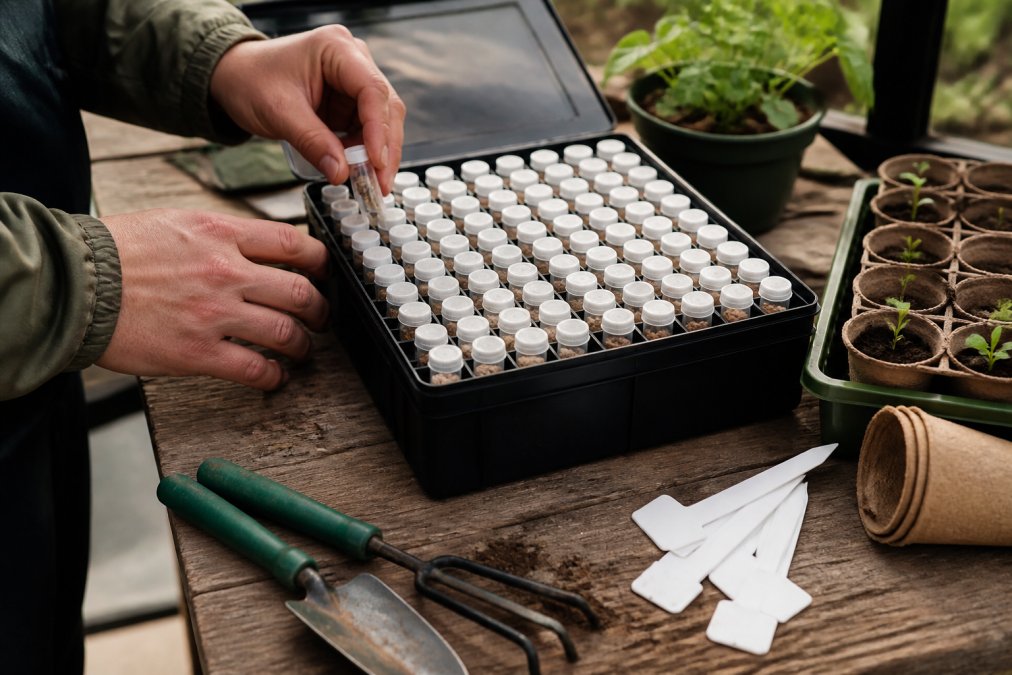
Seed viability degrades faster than most growers expect. Heat, humidity, and light are the three primary enemies of stored seed. The standard recommendation from the National Center for Home Food Preservation seed storage guidelines is to store seeds in cool, dry, dark conditions with stable temperature and humidity.
For greenhouse operators managing multiple varieties, organization is as significant as the storage environment. A collection of 30 or more varieties stored in unmarked envelopes creates real planting errors. Mislabeling a tomato variety or confusing a short-season pepper with a long-season one wastes an entire production cycle.
The Walerica Seed Organizer Kit from Moderno Top Shop holds up to 120 individual seed varieties in labeled, water-resistant vials with all labeling materials included. For greenhouse operators managing dozens of varieties, this structured system eliminates the guesswork that leads to planting errors. At $49.99, it's a straightforward investment in operational accuracy.

A practical seed inventory checklist:
- Label every container with variety name, source, and year of harvest or purchase
- Record germination test results and expected viability window
- Conduct a germination test on any seed older than 2 years before committing production space
- Store seeds in sealed, moisture-proof containers away from heat sources
- Review and rotate inventory at the start of each season, discarding non-viable stock
Greenhouse Automation, IoT, and Sustainable Practices
Automation is no longer exclusive to commercial-scale operations. The cost of sensors, controllers, and connected devices has dropped to the point where a small greenhouse can implement meaningful automation for a few hundred dollars.
The practical entry point for most growers is environmental monitoring: a sensor network that tracks temperature, humidity, and light levels and sends alerts when conditions go outside target ranges. This eliminates the most common cause of crop loss in unattended greenhouses.
Beyond monitoring, IoT integration typically follows this progression:
- Environmental monitoring: Sensors for temperature, humidity, CO2, and light
- Automated climate response: Thermostats and controllers that trigger fans, heaters, or shade cloth automatically
- Irrigation automation: Timer-based or sensor-triggered irrigation systems
- Data logging and analysis: Recording environmental data to identify patterns and optimize conditions
- Remote management: Smartphone or web-based dashboards for off-site monitoring and control
Sustainable greenhouse practices intersect directly with automation. Variable-speed fans, LED lighting, and demand-controlled irrigation reduce energy and water consumption. Rainwater harvesting, biological pest control, and recycled growth media also reduce operating costs over time. Sustainability and profitability point in the same direction.
Career Paths and Economic Viability in Greenhouse Management
Greenhouse management supports a broader range of career paths than most people realize. Common trajectories include:
- Greenhouse grower or production manager: Responsible for crop scheduling, environmental management, and production targets
- Horticultural technician: Hands-on crop care, propagation, and pest scouting, often the entry point for formal careers
- Agricultural extension specialist: Works with growers to apply research-based practices
- Greenhouse technology specialist: Focuses on automation, sensor networks, and controlled environment agriculture systems
- Retail horticulture manager: Manages nursery stock, wholesale distribution, and plant sales
On the economic side, profitability requires honest accounting of fixed costs against achievable revenue. The key variable is yield per square foot. Maximizing canopy coverage, minimizing crop cycles, and targeting high-value specialty crops are the standard levers for improving unit economics.
A common mistake among new operators is underestimating heating costs in cold climates and overestimating achievable market prices for commodity crops. Specialty vegetables, herbs, and propagation material typically generate stronger margins.
Greenhouse management rewards growers who treat it as a system, not a collection of individual tasks. Climate control, pest management, crop production, and seed inventory all interact, and weakness in any one area pulls down the rest. If you're serious about getting your seed collection organized and protected across seasons, the Walerica Seed Organizer Kit from Moderno Top Shop gives you 120 labeled, water-resistant vials and all the tools you need to bring real order to your inventory. Get your Walerica Kit and stop losing production cycles to mislabeled or degraded seed.
Frequently Asked Questions
What is greenhouse management?
Greenhouse management covers every operational decision that keeps plants healthy and productive inside a controlled structure. This includes regulating temperature, humidity, and light; scheduling irrigation and fertilization; scouting for pests and disease; organizing nursery stock; and maintaining infrastructure. Effective greenhouse management combines agronomy, environmental control, and business operations so growers consistently hit yield and quality targets across every planting season.
What are the core responsibilities of a greenhouse manager?
A greenhouse manager oversees daily agricultural operations including climate regulation, crop cultivation, propagation schedules, pest management, and team supervision. On the business side, they track inventory, manage wholesale distribution logistics, control input costs, and ensure biosecurity protocols are followed. In smaller operations, one person often handles both the horticultural science and the administrative work, making organized systems, including solid seed storage and inventory management, essential to staying efficient.
What is the most effective way to organize a greenhouse for maximum yield?
Zone your space by crop type and growth stage so propagation areas, vegetative zones, and finishing benches never compete for the same environmental conditions. Label every tray, bench, and seed lot clearly. Keep a running inventory of nursery stock and seed varieties so nothing gets lost between seasons. A dedicated seed storage system, like the WALERICA Seed Organizer Kit with 120 labeled vials, eliminates the disorganization that quietly costs growers time and germination rates each year.
What environmental factors are most critical in greenhouse management?
Temperature and humidity sit at the top of the list because they directly affect plant physiology, disease pressure, and growth rates. Ventilation controls both and also manages CO2 levels. Light intensity and photoperiod control determine flowering and vegetative cycles for many crops. Soil or growth media moisture, managed through irrigation systems, rounds out the four factors growers monitor daily. Missing any one of them consistently leads to crop health problems that are expensive to reverse.
How does seed organization impact overall greenhouse productivity?
Poor seed storage leads to mislabeled varieties, lost germination data, and wasted planting cycles. When seeds are stored in a structured system with labeled compartments, growers can pull the right variety quickly, track germination rates by lot, and plan succession planting without guesswork. For operations managing dozens of varieties, a purpose-built organizer that holds up to 120 seed types, with moisture-resistant construction, protects both the seeds and the planning time invested in selecting them.
What tools are essential for professional greenhouse management?
Climate monitors and automated controllers for temperature, humidity, and ventilation are the foundation. Irrigation timers and fertigation systems handle nutrient management at scale. For crop tracking, growers rely on labeled nursery stock systems and organized seed inventories. Basic pest scouting tools, sticky traps, hand lenses, and spray equipment, support integrated pest management. At the organizational level, a reliable seed storage case like the WALERICA kit keeps variety records intact from one season to the next.
Can a small home greenhouse benefit from the same management practices as a commercial operation?
Yes, and the principles scale down cleanly. A home grower with 20 to 30 plant varieties still benefits from zoned growing areas, consistent watering schedules, and labeled seed storage. The WALERICA Seed Organizer Kit works just as well for a gardener with 30 varieties as for one managing 100, the unused slots simply stay empty until the collection grows. Starting with good organization habits early prevents the disorganized seed boxes and unlabeled trays that frustrate even experienced home growers.
This article was written using GrandRanker
