
Top 5 Seed Inventory Tracking Systems for Hobbyist Growers
Table of Contents
- Quick Comparison: Top 5 Seed Inventory Tracking Systems
- WALERICA Seed Storage Organizer Kit: Best Physical System
- Seed Inventory Spreadsheet Template: Free DIY Tracking
- Mobile Apps for Seed Tracking: Convenience vs. Depth
- Cloud-Based Seed Databases: Real-Time Tracking for Larger Collections
- Garden Record Keeping Best Practices: Making Any System Work
- Conclusion: Choosing Your Seed Inventory System
- Frequently Asked Questions
Last Updated: September 29, 2026
Quick Comparison: Top 5 Seed Inventory Tracking Systems
A good seed inventory system keeps every packet labeled, dated, and findable before planting season starts. For hobbyist growers, the right setup usually combines one physical organizer for day-to-day access with a simple digital record for germination rates and lot tracking. This guide from Moderno Top Shop compares five practical options, from a sturdy storage kit to free spreadsheet templates, so you can match a system to the size of your collection.
Here is the short version before the details:
| System | Type | Best For | Cost |
|---|---|---|---|
| WALERICA Seed Storage Organizer Kit | Physical organizer | Collections up to 120 varieties | $49.99 |
| Spreadsheet template | Digital, DIY | Budget-focused growers | Free |
| Mobile tracking apps | Digital, portable | Field and greenhouse use | Free to low-cost |
| Cloud-based databases | Digital, shared | Larger or multi-site collections | Varies |
| Hybrid paper + digital | Mixed | Long-term preservation | Low |
The gap most guides miss: hobbyist growers do not need commercial-grade software. They need a system they will actually maintain. Below, we break down each option, what it does well, and where it falls short.

WALERICA Seed Storage Organizer Kit: Best Physical System
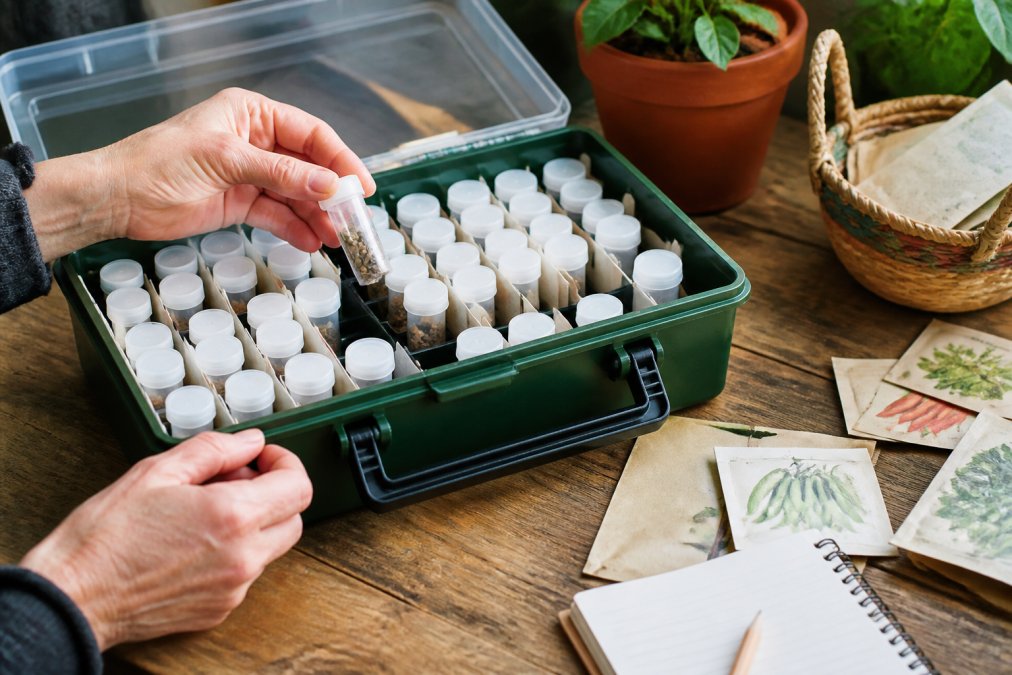
The WALERICA Seed Storage Organizer Kit is the strongest physical option for hobbyist growers who want their seed collection protected, labeled, and ready to plant without touching an app. It holds up to 120 individual seed storage vials, so you can separate vegetable, flower, herb, and heirloom varieties in one portable box.
What sets it apart is what comes in the box.
Seed Inventory Spreadsheet Template: Free DIY Tracking
A seed inventory spreadsheet template is a free digital grid for logging variety names, purchase dates, quantities, and germination rates. It costs nothing and works on any computer, which makes it the default starting point for growers who want digital organization without paying for software. The catch most guides skip: a spreadsheet only earns its keep if it does math for you and tracks the storage conditions that actually determine whether old seed will sprout.
Columns worth keeping
- Variety and cultivar name (include the Latin name for anything you save seed from, to avoid cross-pollination surprises)
- Lot number and purchase year
- Quantity remaining (count packets, grams, or seeds, just be consistent)
- Germination rate from your last test
- Test date and test sample size
- Storage location (which box, which shelf, which room)
- Storage conditions (temperature range and whether you use a desiccant)
- Days to maturity, so you can back-calculate sowing dates
- Source or vendor, for reordering and for tracking which suppliers ship viable seed
Formulas that turn a list into a system
A flat list goes stale. A few simple formulas keep it alive:
-
Age in years:
=YEAR(TODAY())-B2where B2 is the purchase year. Anything over three years for onions, parsnips, or leeks deserves a germination test before you trust it. -
Expected viable seeds:
=D2*E2(quantity remaining × germination rate). This is the number that actually tells you whether you have enough to plant. -
Reorder flag:
=IF(F2<70%,"TEST",IF(F2<50%,"REPLACE","OK")). A common pattern is to test anything under 80% and replace anything under 50%, though the threshold varies by species. -
Sow-by date:
=B2+3for short-lived species,=B2+5for longer-lived ones. Treat these as reminders, not rules, storage conditions matter more than the calendar.
The storage column nobody builds
Seed longevity depends heavily on storage conditions, and this is where most spreadsheet templates fall short. Moisture and heat are the two biggest threats to viability. A simple approach is to add two columns, one for the room's typical temperature range and one for whether the container holds a desiccant packet, and to log a reading each time you open the box.
Pair it with a physical organizer
The workable approach is to pair the spreadsheet with a physical organizer: the box holds the seeds, the sheet holds the history. Label each vial or packet with the same lot number you use in the sheet, so a glance at the box tells you which row to open. This hybrid setup gives you batch management, germination tracking, and historical data analysis without a subscription, and it survives the mid-season slump that kills most digital-only systems.
Free seed inventory spreadsheet templates from extension offices
Mobile Apps for Seed Tracking: Convenience vs. Depth
Mobile apps bring real-time tracking to the garden bed, but they trade depth for convenience. You can log a planting, snap a photo of a seedling, and check what you sowed last spring from your phone. For growers who move between raised beds and a greenhouse, that portability matters. The problem is that the app category splits into two very different tools, and most hobbyists end up using the wrong one for the job.
WALERICA Seed Storage Organizer Kit →
Two kinds of apps, two jobs
Garden-planning apps are built around the annual vegetable calendar. They typically offer a visual bed layout, a planting-date calculator keyed to your frost dates, and reminders for succession sowing. They are excellent at answering "what do I plant this week?" and weak at answering "is this 2019 packet of beet seed still worth planting?"
What to look for in a free tier
- Offline access. Greenhouses and back gardens often have poor signal. If the app cannot open without a connection, it will fail you at the worst moment.
- Photo attachments. A photo of the packet's lot number and date is faster and more reliable than typing it in the cold.
- Custom fields. If you cannot add a "germination rate" or "storage location" field, the app cannot track what matters.
- Export. Any record you cannot export is a record you do not own. Look for CSV or plain-text export before you invest hours of data entry.
- Variety limits. Free tiers commonly cap the number of varieties or plants you can store. Check the cap against your actual collection size before committing.
Where apps fall short
Most consumer apps are built around annual vegetable planning rather than long-term seed preservation, so lot tracking and viability records often get shallow treatment. They rarely prompt you to retest germination, and they almost never track the temperature and humidity conditions that determine how long your seed stays alive. A seed that has sat in a warm garage for two summers may show a 40% germination rate even if the app still lists it as "in stock."
The honest recommendation
Cloud-Based Seed Databases: Real-Time Tracking for Larger Collections
Cloud-based seed databases suit growers managing larger or multi-site collections where more than one person needs access. These tools store your records online, sync across devices, and support customizable fields for cultivar details, storage conditions, and procurement notes.
Garden Record Keeping Best Practices: Making Any System Work
Garden record keeping best practices come down to three habits: label everything the moment it arrives, record germination results after every test, and review your inventory before each planting season. The system matters less than the consistency.
A simple routine that holds up over years:
- Label each packet or vial with variety name and year
- Store seeds somewhere cool, dark, and dry
- Note germination rates after each seed starting round
- Run an inventory audit before spring ordering
- Track harvest results against what you planted
Conclusion: Choosing Your Seed Inventory System
The best seed inventory tracking system is the one you will actually keep updated. For most hobbyist growers, that means a physical organizer for the seeds themselves and a lightweight digital record for the history. If your collection is small and hands-on, a spreadsheet is enough. If it is large or shared, a cloud tool earns its cost.
Frequently Asked Questions
What is the best way to organize a large seed collection?
For collections over 50 varieties, a physical organizer with individual vials or envelopes keeps seeds accessible and protected. The WALERICA kit holds 120 varieties with labels and tools included. Pair it with a digital seed inventory spreadsheet to track germination rates, lot numbers, and planting dates. This dual approach gives you quick visual access plus searchable historical data for better planning.
Do hobbyist gardeners need specialized software for seed tracking?
Not always. If you grow fewer than 20 varieties, a seed inventory spreadsheet template or a simple notebook works well. Specialized software becomes useful when you track germination rates across multiple seasons, manage lot numbers for seed viability, or coordinate planting schedules. Start simple and upgrade only when your collection outgrows your current method.
How do I keep track of seed germination dates and inventory?
Record the date you start each batch and note the expected germination window on your seed packet or in your spreadsheet. After germination, log the actual rate. For physical tracking, use labeled envelopes or vials organized by sowing season. The WALERICA organizer includes labels and clips so you can mark each variety clearly and see at a glance what needs replanting.
What are the benefits of using a physical seed organizer versus an app?
A physical organizer like the WALERICA kit protects seeds from moisture and damage while giving you immediate visual access without opening an app. Apps offer search and reminders but cannot store the seeds themselves. Many growers use both: a physical system for storage and a spreadsheet or app for historical data like germination rates and cost-per-seed analysis.
