
Best Seed Storage Organizers 2026: Guide
Table of Contents
- Why Seed Storage Organizers Matter for Your Garden
- Key Factors for Seed Storage and Preservation
- How to Organize Garden Seeds Effectively
- Best Containers for Long-Term Seed Storage
- Seed Packet Organization Tips for Easy Access
- The WALERICA Seed Storage Organizer: A Complete Solution
- Maintaining Seed Viability Year-Round
- Conclusion
- Frequently Asked Questions
Last Updated: September 23, 2026
Why Seed Storage Organizers Matter for Your Garden
A well-organized seed collection transforms the chaos of planting season into something manageable and efficient. The best seed storage organizers protect your seeds from moisture, light, and temperature fluctuations while keeping everything labeled and accessible. Whether you're managing 30 varieties or 120, having a dedicated system means you'll actually use your seeds instead of losing track of them.

Gardeners who invest in proper seed storage report that they plant more intentionally and waste fewer seeds. The difference between loose packets scattered in a drawer and a structured seed storage system is the difference between guesswork and real planning. You know exactly what you have, when it expires, and where to find it.
Key Factors for Seed Storage and Preservation
Several critical factors determine whether your seeds remain viable year after year. Understanding these will help you choose the right seed storage organizer for your needs.
Moisture control is the primary enemy of seed longevity. Seeds absorb moisture from humid air, which triggers germination even when you don't want it. Look for organizers with airtight seals or compartments that keep humidity out. However, airtight containers alone are insufficient in humid climates, you must actively manage moisture inside the container using desiccants.
Silica gel packets are the most effective desiccant for seed storage. They absorb moisture and can be recharged by heating (typically in a 250°F oven for 1-2 hours until the gel turns from blue or pink back to its original color). A standard 5-gram silica gel packet can protect 50-100 seed packets in a sealed container for 6-12 months, depending on ambient humidity. For long-term storage (3+ years), use 10-gram packets or multiple smaller packets per container.
Alternative desiccants include uncooked rice (less effective, requires replacement every 3-4 months) and powdered milk (wrap in cheesecloth, replace every 2-3 months). Avoid commercial desiccants designed for electronics, they often contain additives unsuitable for food crops.
To verify your desiccant is working, monitor relative humidity inside the container using an inexpensive digital hygrometer (available for $10-$20). Ideal humidity for seed storage is below 50%, with 30-40% being optimal. If humidity creeps above 60%, your desiccant has saturated and needs replacement or recharging immediately.
Light protection matters more than many gardeners realize. Exposure to UV light degrades seed viability over time. The best seed storage systems either use opaque materials or keep seeds in dark, cool spaces. Transparent containers work fine if stored in a dark cabinet, closet, or basement away from windows and grow lights.
Temperature stability prevents premature germination and extends seed life. Fluctuating temperatures between warm and cold stress seeds. Ideally, store seeds between 32°F and 41°F, though consistent room temperature (around 65-70°F) works reasonably well for short-term storage. Avoid basements prone to temperature swings or attics that heat up seasonally. If you live in a warm climate where room temperature regularly exceeds 75°F, refrigerator storage (in an airtight container with desiccant) becomes essential, cold storage can extend viability from 3-5 years to 10+ years.
Organization by crop type makes planting season infinitely easier. When you can quickly locate all your vegetable seeds, flower seeds, and herb seeds separately, you save time and reduce planting errors. This is where compartmentalized organizers shine, they enforce organization naturally.
How to Organize Garden Seeds Effectively
Effective seed organization starts with a simple system you'll actually maintain. Complexity kills consistency, so keep your approach straightforward.
Sort by planting timeline. Group seeds by when you plant them: early spring, late spring, summer, and fall crops. This makes seasonal planning faster and prevents you from overlooking seeds that need immediate attention. When spring arrives, you're not hunting through your entire collection, you grab the spring section.
Label everything clearly. Include the crop name, variety, purchase date, and expected germination rate if known. Use waterproof labels since seed storage areas can be humid. Legible handwriting or printed labels matter far more than fancy formatting. You need to read it quickly during planting season.
Create a visual inventory. Keep a simple list or spreadsheet of what you have. This prevents buying duplicates and helps you plan crop rotations. Many gardeners photograph their organized collection as a backup reference.
Group by germination speed. Seeds with similar germination periods can be started together. This saves time during spring planting and reduces the chance of starting seeds too early or too late.
Store by container size. Some seeds are tiny (lettuce, carrot) while others are large (bean, squash). Organizers with adjustable compartments or multiple slot sizes accommodate this variation naturally.
WALERICA Seed Storage Organizer Kit →
Best Containers for Long-Term Seed Storage
Different container types serve different purposes. Your choice depends on how many seeds you're storing, how long you want to keep them, and where you'll store them.
Airtight plastic vials work well for individual seed varieties. They stack efficiently and keep moisture out when sealed properly. The downside is that you need many individual vials if you have a large collection, which gets expensive quickly. Standard 2-dram vials (approximately 0.25 oz capacity) cost $0.30-$0.50 each in bulk and hold most vegetable and flower seeds comfortably. Look for vials with snap caps or screw caps rather than push-fit lids, which lose their seal over time.
Compartmentalized organizer boxes hold multiple seed packets or small containers in one place. These are ideal if you want everything in one portable unit. Look for models with adjustable dividers so you can customize compartment sizes. The WALERICA system mentioned later in this article exemplifies this approach. The trade-off is that compartmentalized boxes are only as airtight as their lid seal, verify the lid creates a gasket-tight fit before purchasing.
Food-grade storage containers with tight-fitting lids provide excellent moisture protection. They're affordable and durable. The trade-off is that you lose the visual organization that compartmentalized systems provide, you're back to labeling and searching. Rubbermaid or similar brands with locking lid mechanisms work better than simple snap-on lids.
Pest-resistant storage for garage and shed environments is rarely discussed but critical if you store seeds outside your climate-controlled home. Rodents and insects can destroy an entire seed collection. Use rigid plastic containers with locking lids (not cardboard boxes, which rodents penetrate easily). Store containers on shelves at least 12 inches off the floor and away from walls, this makes it harder for rodents to access them. Seal any gaps around the container with weatherstripping tape. For maximum protection in high-pest areas, store seed containers inside a locked metal cabinet or toolbox. This dual-barrier approach (sealed plastic container + metal enclosure) is the only reliable method for outdoor storage. Never store seeds in open shelving or cardboard boxes in unheated spaces.
Vacuum-sealed bags work for long-term storage of bulk seeds, though they're less convenient for active gardening. Once opened, the seal is broken, so they're better for seeds you're preserving for future seasons rather than this year's planting. Vacuum-sealed seeds stored in a freezer can remain viable for 15+ years.
Refrigerator or freezer storage extends seed viability significantly, sometimes to 10+ years. Keep seeds in airtight containers with desiccant packets inside the refrigerator or freezer. The cold slows metabolism and prevents germination.
Seed Packet Organization Tips for Easy Access
How you arrange your packets determines whether you'll actually find what you need when you need it.
The WALERICA Seed Storage Organizer: A Complete Solution
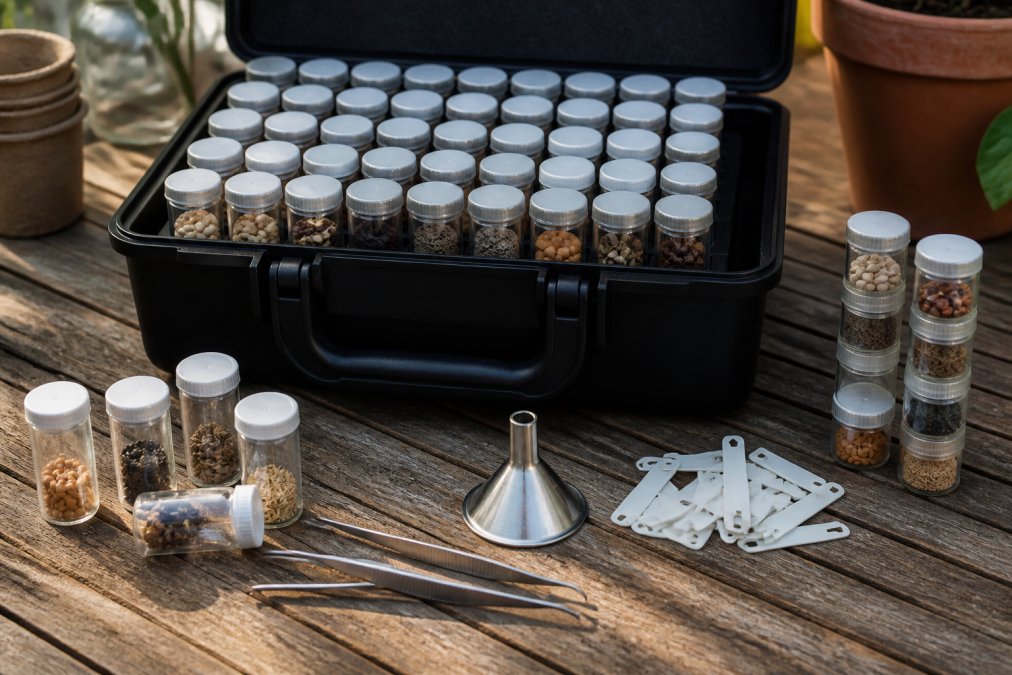
The WALERICA Seed Storage Organizer from Moderno Top Shop addresses every challenge we've discussed. This system holds up to 120 individual seed storage vials, eliminating the guesswork about what you have and where it is.
Maintaining Seed Viability Year-Round
Proper storage is only half the equation. How you maintain your seeds throughout the year determines whether they germinate when you plant them.
Conclusion
Organizing your seed collection transforms how you approach gardening. Rather than rediscovering forgotten packets mid-season, you'll plant with intention and confidence. The WALERICA Seed Storage Organizer from Moderno Top Shop gives you a complete system designed for this exact purpose, holding up to 120 individual seed storage vials with included labels, vials, tweezers, and a water-resistant carrying case. Get your WALERICA kit and spend your energy growing, not searching.
| Factor | Why It Matters | Solution |
|---|---|---|
| Moisture Control | Seeds absorb humidity and germinate prematurely | Airtight sealing with desiccant packets |
| Light Protection | UV exposure degrades seed viability | Opaque containers or dark storage |
| Temperature Stability | Fluctuations stress seeds and trigger germination | Cool, consistent environment (32-70°F) |
| Organization | Scattered seeds get lost or forgotten | Compartmentalized organizer with labels |
| Accessibility | You need seeds quickly during planting season | Logical sorting system (by crop type, alphabetically) |
Frequently Asked Questions
What materials are best for long-term seed storage?
Airtight containers made from durable, food-grade plastic or glass protect seeds from moisture and temperature fluctuations. Look for organizers with hermetic seals, UV protection, and compartments that keep different seed varieties separated. Desiccants inside the storage container help control humidity, which is critical for maintaining seed viability over months or years.
How do you keep seeds organized and dry?
Use a modular seed storage organizer with individual compartments or vials for each seed variety. Store the organizer in a cool, dry location away from direct sunlight. Include desiccant packets or silica gel inside to absorb excess moisture. Label each compartment clearly with the seed type, planting date, and expected germination rate so you can track your collection efficiently.
What is the best way to label seed packets for easy access?
Use waterproof labels or markers to identify each seed variety by name, planting depth, days to germination, and harvest date. Organize labels by crop type, vegetables, herbs, flowers, so you can locate seeds quickly during planting season.
Do seed storage containers need to be airtight?
Yes, airtight containers are essential for preserving seed viability. They prevent moisture and oxygen from entering, which slows the aging process and extends germination rates. The WALERICA Seed Storage Organizer includes a water-resistant design with secure closures on individual vials, protecting your entire seed collection from environmental damage.
